Stories from every corner of India
All About India — Travel, Culture, Stories

Food

What to Eat in Varanasi: A Practical Food Guide

Explore Varanasi food through kachori sabzi, tamatar chaat, malaiyyo, paan and a respectful one-day food walk.

By All About India Editorial DeskPublished 7 min read
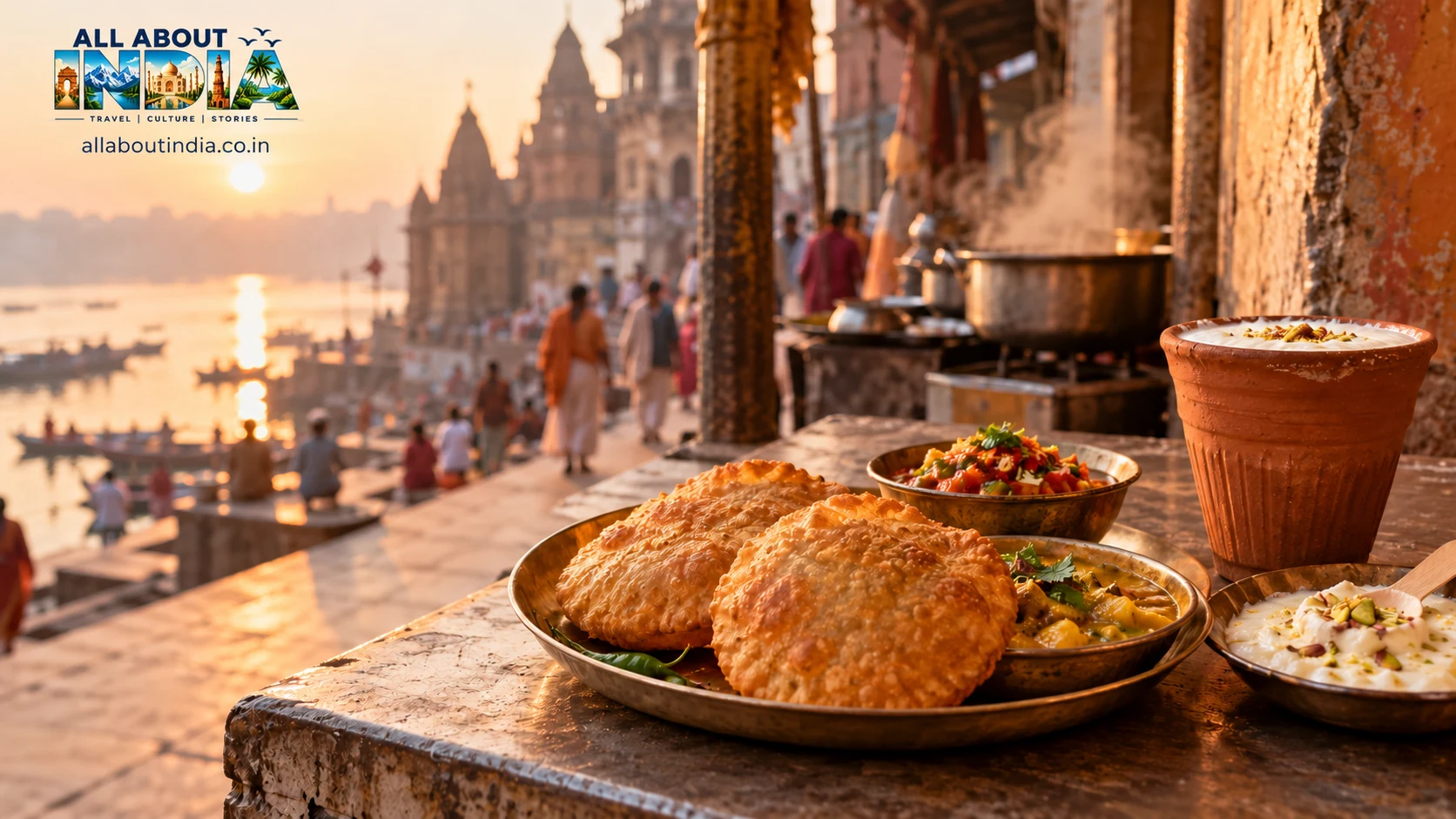
Kachori sabzi, chaat and lassi beside the Varanasi ghats at sunrise

Introduction

A Varanasi food guide should do more than list famous dishes. Food in the city follows a daily rhythm: breakfast stalls open early, chaat is assembled to order, seasonal sweets appear for a short window and paan is prepared with its own small ceremony. This guide explains what to try, how to plan a manageable food walk and how to make respectful choices when you are eating in a busy pilgrimage city.

The suggestions below are an editorial starting point, not a claim of personal tasting experience. Recipes, availability, shop practices and prices change. Ask locally, check current conditions and use the complete Varanasi travel guide to plan the wider journey.

What Varanasi food is known for

Banarasi food is shaped by the city’s old lanes, pilgrimage culture, dairy traditions, seasonal produce and the movement of people through the ghats and markets. A first visit may bring together crisp fried breads, spiced potato, tangy chutneys, cooling lassi, milk-based sweets and paan. The same dish can taste different from one neighbourhood to another, so approach the city as a collection of small food traditions rather than one fixed cuisine.

For a better experience, plan by meal and location. Eat breakfast before a long walking route, keep lunch simple if the afternoon is hot and leave room for a seasonal sweet or evening snack. Small portions make it easier to compare foods without turning the day into a checklist.

Start with kachori sabzi

Kachori sabzi is one of the most recognisable breakfast combinations in Varanasi. The kachori is fried until crisp and served with a spiced potato preparation. Some shops offer a second vegetable or a sharper chutney, and the balance of heat and sourness varies. It is hearty food, so a small serving is a sensible first order if you have other stops planned.

Look for a place with regular local turnover, freshly cooked food and clean serving practices. Go earlier rather than later if breakfast is the main reason for your visit. Ask about spice levels, eat slowly and keep water available, especially if you are not used to strong chilli.


Try tamatar chaat and other street snacks

Chaat is built around contrast: crisp and soft textures, heat, acidity, sweetness and fresh garnishes. Tamatar chaat is associated with Varanasi, but the exact preparation differs by vendor. Other snacks may appear around the same lanes and markets, depending on the time of day and what is being prepared.

Choose a stall where food is cooked hot and ingredients are being replenished regularly. A long queue is not a guarantee of hygiene, so also look at the water, utensils, surfaces and storage. If you have a sensitive stomach, begin with one small portion and avoid combining several unfamiliar foods at once.

Look for malaiyyo in the cool season

Malaiyyo is a light, airy milk dessert associated with cooler weather. Its delicate texture is part of the experience: it is best eaten soon after serving rather than carried across the city. Availability is seasonal and can vary with weather, so ask before making a special detour.

Because it is dairy-based, visitors with allergies or dietary restrictions should ask about ingredients and preparation. Do not treat a seasonal food as guaranteed simply because it appears in older travel lists; a current local check is more reliable.

Lassi, sweets and slower stops

Lassi can be a useful pause during a walking day, especially when served chilled and in a clean glass or cup. Local sweet shops may offer milk sweets, syrup-based treats and regional variations. Ask what is fresh that day instead of ordering a large selection automatically.

If you are travelling during a festival or a busy holiday period, the range may be wider but queues and storage conditions may also change. Keep the pace comfortable and choose a sit-down stop when you need a break from the lanes.

Banarasi paan and after-meal traditions

Paan is part of Varanasi’s public food culture and is prepared in many styles. If you have never tried it, ask what the preparation contains and whether it includes tobacco, areca nut or other ingredients you want to avoid. It is completely reasonable to watch the preparation or choose a sweet version instead.

Do not photograph a vendor or customer without permission. A food tradition is not a performance staged for visitors, and a respectful question often leads to a better explanation than a rushed photograph.

Where to explore food in Varanasi

The lanes around Godowlia and Vishwanath Gali are useful for exploring old-city snacks, while the area around Assi Ghat offers a different mix of breakfast spots, lassi, cafés and evening food. These are active neighbourhoods rather than themed food parks. Leave room for residents, deliveries, worshippers and processions.

A practical food walk can begin with breakfast, continue through a short market route and finish near the ghats. Pair the route with the Varanasi ghats guide so food stops do not crowd out the cultural places you came to understand.

Vegetarian and dietary considerations

Many well-known foods in the old city are vegetarian, but ingredients and cooking practices are not always displayed in detail. Ask clearly about dairy, nuts, gluten, onion, garlic and preparation surfaces. Visitors with serious allergies should carry a short explanation in Hindi and choose places that can answer questions confidently.

For a food-focused day, carry a small backup snack and do not skip meals to chase a particular dish. Dietary needs are easier to manage when you plan ahead rather than relying on the busiest stall to explain every ingredient.

A simple one-day Varanasi food itinerary

  1. Morning: Start with kachori sabzi, then walk slowly through the old city while the lanes are active but not yet at their busiest.
  2. Late morning: Try a small chaat portion and pause for water. Add a market or temple visit rather than another large meal.
  3. Afternoon: Choose a lighter lunch or lassi, then rest during the hottest part of the day.
  4. Early evening: Look for a seasonal sweet or paan and continue toward a ghat at a pace that leaves space for local activity.
  5. Night: Finish with a meal where you can ask about ingredients and spice, rather than ordering several unknown dishes at once.

This route is deliberately flexible. Varanasi is easier to enjoy when food is part of the day’s movement, not a race between addresses.

Practical food-safety habits

  • Prefer food that is cooked hot and served soon after preparation.
  • Use sealed or trusted drinking water and be careful with ice if its source is unclear.
  • Wash your hands before eating and be cautious with raw garnishes when handling is uncertain.
  • Start with small portions, particularly on your first day.
  • Keep emergency contacts and any necessary medicines accessible.

These are general travel precautions, not medical advice. If you become unwell, stop experimenting and seek qualified local medical help.

Frequently asked questions

What food is Varanasi famous for?

Visitors commonly look for kachori sabzi, tamatar chaat, seasonal malaiyyo, lassi, local sweets and Banarasi paan. Recipes and availability vary by shop and season, so use the list as a starting point rather than a fixed ranking.

What should I eat first in Varanasi?

Kachori sabzi is a practical first stop because it is a familiar morning combination and easy to fit into a walking route. Order a small portion first and ask about spice levels.

Is Varanasi street food vegetarian?

Many well-known street foods in the old city are vegetarian, but visitors should still ask about ingredients, dairy, shared cooking surfaces and preparation methods if those details matter to them.

When is malaiyyo available?

Malaiyyo is generally associated with cooler weather, but the exact season and daily availability can change. Ask locally on the day rather than relying on an old listing.

How can I eat street food safely in Varanasi?

Choose busy but clean-looking stalls, prefer freshly cooked food, use trusted water, start with small portions and avoid foods whose ingredients or storage you cannot understand.

Conclusion

A good Varanasi food walk is less about collecting every famous dish and more about noticing the city’s rhythm. Eat slowly, ask respectful questions, make room for local life and verify time-sensitive details before travelling. For transport, temples, ghats and a longer itinerary, continue to the Varanasi travel guide.