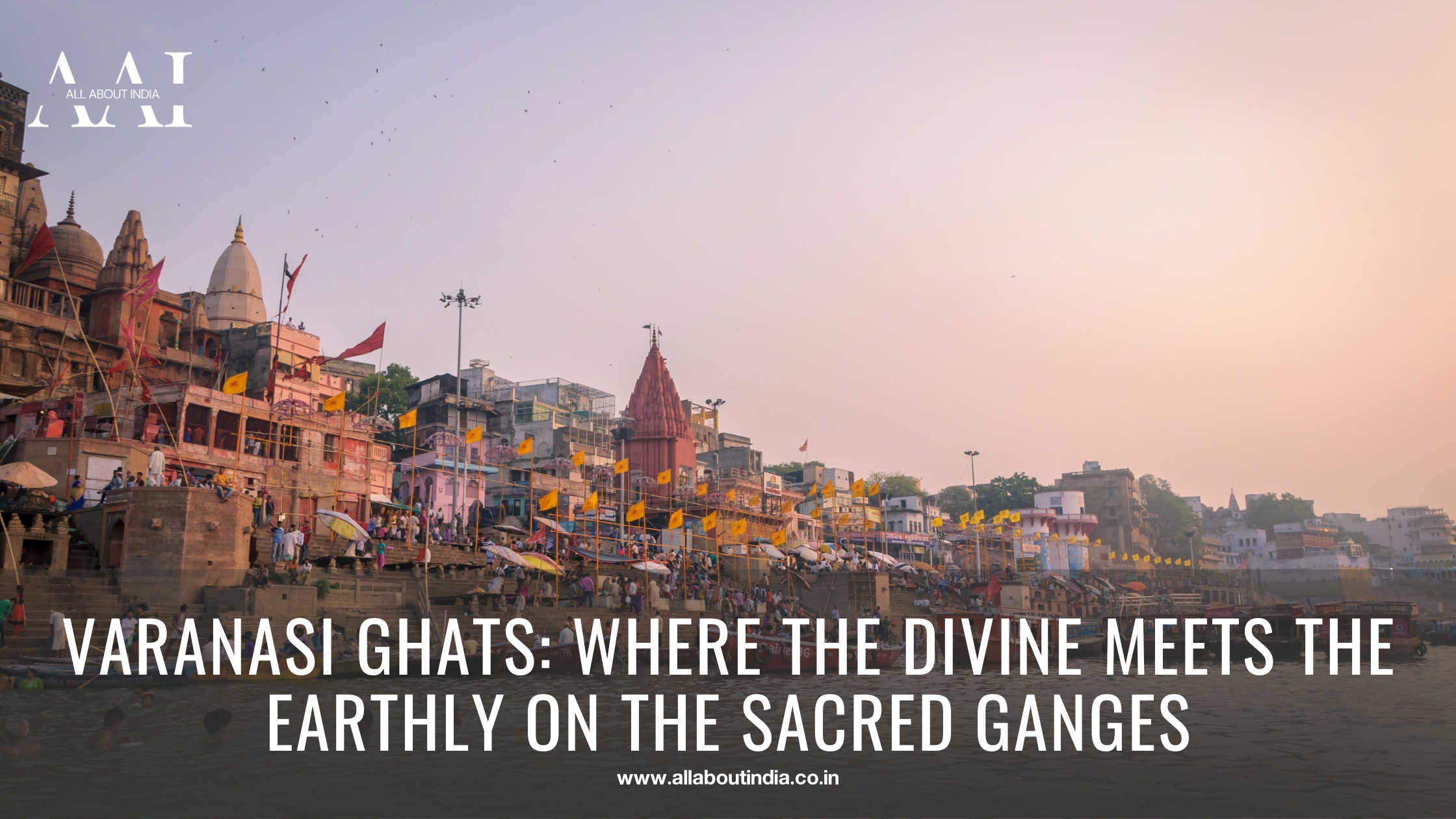
Picture this: the first rays of dawn painting the sky in shades of gold and crimson, the gentle sound of temple bells mixing with devotional chants, and thousands of pilgrims descending ancient stone steps toward the holy Ganges. This is the timeless magic of Varanasi ghats—a spiritual symphony that has played out for over three millennia.
The Varanasi ghats are far more than architectural marvels or tourist attractions. They represent the beating heart of India’s oldest living city, where life and death, devotion and celebration, ancient rituals and modern life converge in a mesmerizing dance. These 84 stepped embankments stretching along the western bank of the Ganges River form a sacred corridor that connects heaven and earth, offering pilgrims a pathway to salvation and visitors an unforgettable glimpse into the soul of India.
Whether you’re a spiritual seeker yearning for transcendence, a culture enthusiast eager to witness living traditions, or simply a traveler drawn to places where time seems to stand still, the Varanasi ghats promise an experience that will transform your understanding of life, death, and everything in between.
Understanding the Varanasi Ghats: More Than Sacred Steps
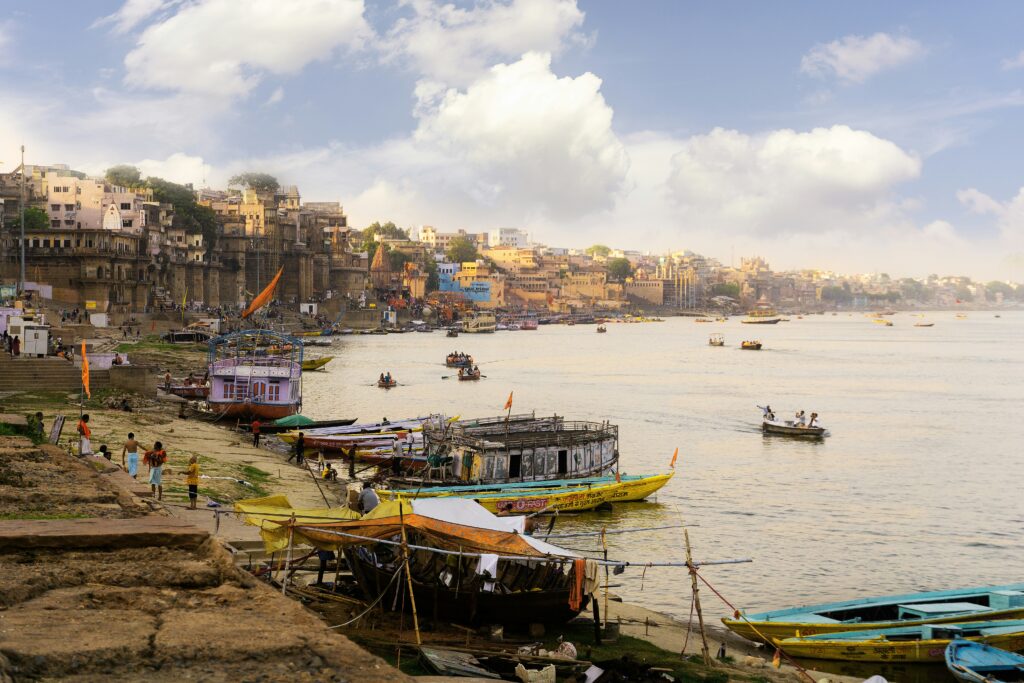
The word “ghat” comes from the Sanskrit term “ghatta,” meaning a series of steps leading down to a water body. But the Varanasi ghats transcend this simple definition. For Hindus, the Ganges River embodies the goddess Ganga herself, and the ghats serve as the interface between the mortal and divine realms.
The Sacred Geography
Stretching approximately seven kilometers along the western bank of the Ganges, the Varanasi ghats create a continuous spiritual landscape. The city’s positioning is considered especially auspicious—at the confluence point where the holy Ganges curves northward rather than flowing east-west, creating what believers call the “Uttarvahini” (northward flowing) Ganga, considered particularly sacred.
This unique geographical feature means that pilgrims performing rituals at Varanasi ghats face the rising sun while standing in the holy river—a positioning believed to maximize spiritual benefits and cleanse accumulated sins.
The Historical Evolution
Most of the current Varanasi ghats were constructed or rebuilt during the 18th century under Maratha patronage. Royal families from across India—including the Scindias of Gwalior, Holkars of Indore, Bhonsles of Nagpur, and Peshwas of Pune—commissioned these magnificent structures as acts of devotion and to establish their spiritual legacy.
However, the ghats’ spiritual significance dates back much further. Ancient texts mention that Lord Shiva himself established Varanasi, and the Varanasi ghats have served as pilgrimage sites for thousands of years. Archaeological evidence suggests continuous human habitation and religious activity in this area since at least 1200 BCE.
Functions and Purposes
The 84 Varanasi ghats serve diverse purposes. While most function as bathing ghats where pilgrims perform ritual ablutions and prayers, two—Manikarnika and Harishchandra—operate exclusively as cremation sites. Some ghats host specific ceremonies and festivals, others are owned by particular communities or royal families, and a few remain relatively quiet spaces for contemplation.
Each ghat has its own character, mythology, and significance. Some attract crowds of thousands daily, while others offer peaceful solitude. Understanding this diversity helps visitors appreciate the rich tapestry of experiences that Varanasi ghats collectively offer.
Dashashwamedh Ghat: The Crown Jewel of Varanasi Ghats
If the Varanasi ghats have a heart, it beats strongest at Dashashwamedh Ghat. This is the most famous, busiest, and arguably most spectacular of all the ghats lining the Ganges.
The Legend Behind the Name
The name “Dashashwamedh” translates to “ten horse sacrifices” and connects to ancient Hindu mythology. According to legend, Lord Brahma performed ten Ashwamedha yajnas (horse sacrifices) at this spot to welcome Lord Shiva back to Varanasi after a long absence. The ritual was so powerful that the sacred energy still permeates this ghat thousands of years later.
Another version of the tale states that a devout king named Divodas performed these ten sacrifices to atone for sins and please the gods, transforming this location into one of the holiest spots along the Ganges.
The Evening Ganga Aarti: A Spectacle Beyond Words
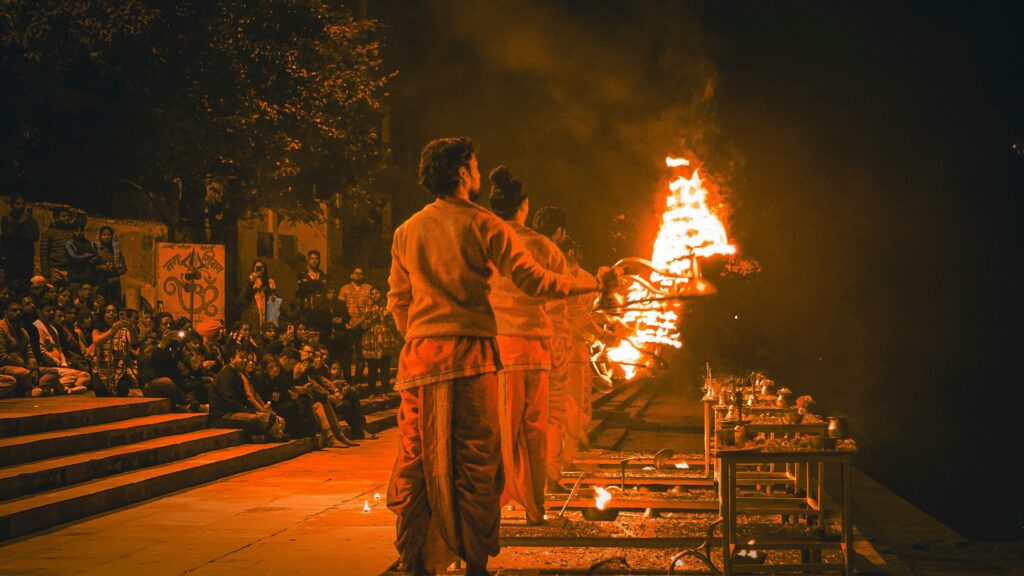
Every evening as the sun sets over the Ganges, Dashashwamedh transforms into a stage for one of India’s most captivating spiritual performances—the Ganga Aarti. This elaborate ceremony, which began in 1991 inspired by Haridwar’s tradition, has become the signature experience at Varanasi ghats.
The Ritual Unfolds: Seven young priests, dressed in traditional saffron robes and white dhotis, stand on elevated platforms facing the river. They move in perfect synchronization, their movements choreographed through years of training. Holding massive brass lamps with multiple wicks, they perform intricate gestures—circling the lamps before the river, raising them skyward, lowering them toward the water—all while chanting ancient Sanskrit mantras.
The air fills with the fragrance of incense, the sound of bells, drums, and conch shells. Devotees wave their own small lamps, offer flowers to the river, and join in the chanting. As darkness deepens, thousands of oil lamps float down the Ganges, their flames reflecting on the water like stars fallen to earth.
Timing Your Visit: The Ganga Aarti at Dashashwamedh Ghat typically begins around 6:30 PM in winter and 7:00 PM in summer, lasting approximately 45 minutes. However, savvy visitors know to arrive at least an hour early to secure a good viewing position, as crowds can number in the thousands, especially during festivals and peak season.
The Marketplace and Atmosphere
Beyond the religious ceremonies, Dashashwamedh pulsates with commercial energy. The narrow lanes behind the ghat form a labyrinthine marketplace where vendors sell everything from silk saris and brass idols to street food and spiritual souvenirs. Flower sellers offer marigold garlands for river offerings, astrologers promise to read your future, and priests offer to perform personalized pujas for a donation.
This commercialization doesn’t diminish the spiritual atmosphere—rather, it reflects the quintessentially Indian integration of the sacred and mundane. The Varanasi ghats have always been places where commerce, culture, and devotion intertwine.
Assi Ghat: Where Tradition Meets Modernity
Located at the southern end of the ghat chain, where the Assi River meets the Ganges, Assi Ghat represents a different face of Varanasi ghats—one that balances ancient traditions with contemporary cultural expressions.
The Mythological Foundation
Hindu mythology recounts that after slaying the demons Shumbha and Nishumbha, Goddess Durga threw her sword into the river. Where it landed, the Assi River came into being, and the ghat took its name from this sacred stream. A massive Shiva lingam sits under a sprawling peepal tree near the ghat, where devotees offer holy water as part of their morning rituals.
According to the ancient text Kashi Khanda, bathing at Assi Ghat during specific astrological periods can liberate one from the cycle of rebirth. This belief draws thousands of pilgrims, especially during important festivals.
Subah-e-Banaras: The Morning Cultural Program
Unlike the evening-focused atmosphere at Dashashwamedh, Assi Ghat comes alive at dawn with “Subah-e-Banaras” (Morning of Varanasi)—a unique cultural program that has become increasingly popular. Every morning around 6:00 AM, the ghat hosts yoga sessions, classical music performances, devotional singing, and the morning Ganga Aarti.
This program offers a more intimate and serene spiritual experience compared to the grand evening spectacle elsewhere. The early morning light, the gentle mist rising from the river, and the soulful music create an atmosphere of profound tranquility.
The Student and Tourist Hub
Assi Ghat’s proximity to Banaras Hindu University has transformed it into a favorite gathering spot for students, artists, and foreign travelers. The surrounding area features cafes, restaurants, bookshops, and guesthouses that cater to both spiritual seekers and cultural explorers.
This blend of local and international, traditional and contemporary, makes Assi Ghat one of the most dynamic among Varanasi ghats. You might witness a traditional puja ceremony at sunrise, then enjoy a cappuccino while discussing philosophy with travelers from around the world by afternoon.
Manikarnika Ghat: The Sacred Gateway to Moksha
Among all Varanasi ghats, none holds more profound spiritual significance—or generates more contemplative emotions—than Manikarnika Ghat, the primary cremation site along the Ganges.
The Eternal Flame and Sacred Mythology
Hindu belief holds that dying in Varanasi and being cremated at Manikarnika Ghat grants moksha—liberation from the endless cycle of death and rebirth. The eternal flame that has burned here for thousands of years, tended by the Dom Raja (chief of the cremation ground workers), is believed to have been lit by Lord Shiva himself.
The ghat’s name comes from another beautiful legend. When Goddess Parvati was bathing here, her manikarnika (jeweled earring) fell into the water. Lord Shiva, using his trident, created a kund (sacred pool) to retrieve it. This pool, known as the Manikarnika Kund, still exists near the ghat and is considered especially sacred.
The Reality of Death and Rebirth
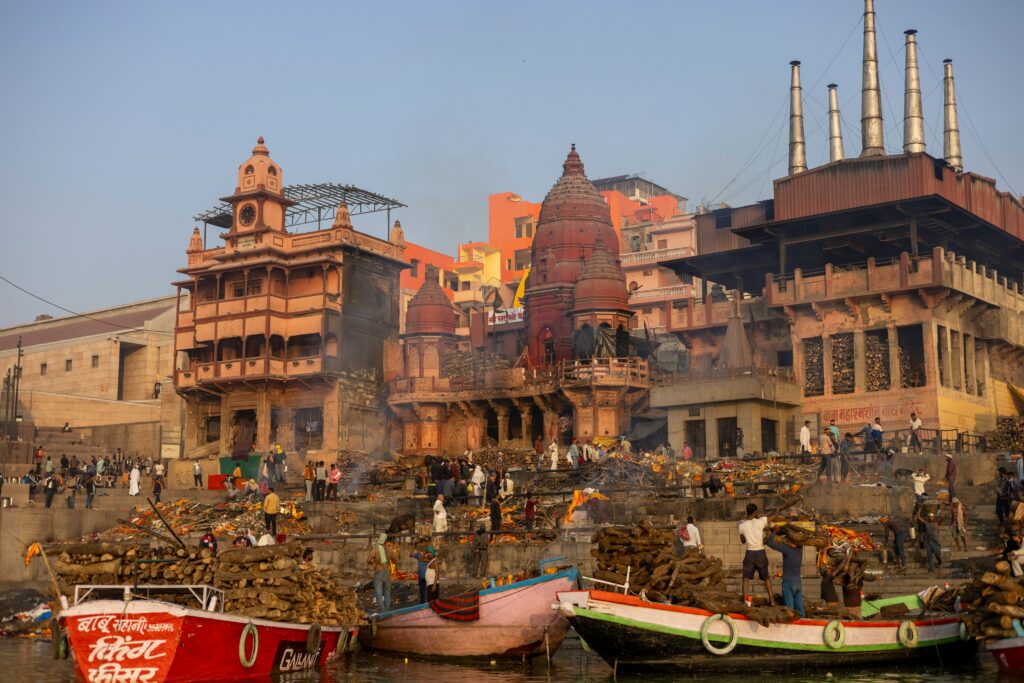
Visiting Manikarnika confronts you with raw, unfiltered reality. The Varanasi ghats generally overflow with life, celebration, and devotion—but here, life’s final act plays out continuously. Funeral pyres burn around the clock, with approximately 200-300 cremations occurring daily.
Wood smoke fills the air, mingling with incense and the river breeze. Families conduct final rites for their loved ones with solemn dignity. The Dom Raja’s family, who have held the hereditary right to tend the sacred fire for centuries, oversee the cremations with ritualistic precision.
For many visitors, witnessing these cremations becomes a profoundly transformative experience. It strips away illusions about permanence, forcing contemplation of life’s ephemeral nature. Yet paradoxically, the atmosphere isn’t one of despair—there’s acceptance, even celebration, in these rituals. Hindus believe that souls departing from Manikarnika escape the wheel of samsara, making this a moment of ultimate liberation.
Respectful Observation
Photography is strictly prohibited at Manikarnika Ghat, and visitors should observe with utmost respect and discretion. This isn’t a tourist attraction but a sacred space where families bid final farewells to their loved ones. Silence, modest dress, and maintaining distance are essential.
The cremation grounds operate under traditional rules maintained by the Dom Raja and his community. While their work is essential and sacred, they also request donations from families and visitors—a practice that can feel commercialized but reflects the economic realities of maintaining this ancient tradition.
Harishchandra Ghat: The Second Cremation Site
While Manikarnika draws more attention, Harishchandra Ghat—the second cremation site among Varanasi ghats—carries its own powerful mythology and spiritual significance.
The Legend of King Harishchandra
This ghat commemorates King Harishchandra, a legendary ruler celebrated in Hindu scriptures for his unwavering commitment to truth. According to the tale, the king’s devotion to truthfulness was tested by the gods through a series of misfortunes. He lost his kingdom, wealth, and eventually had to work at a cremation ground.
Even in these dire circumstances, Harishchandra maintained his integrity, ultimately being rewarded by the gods with restoration of his kingdom and his son’s life. The story makes this ghat a symbol of moral righteousness, and Hindus believe that cremation here grants moksha just as surely as at Manikarnika.
The Unique Massan Holi Celebration
One of the most unusual traditions at Harishchandra Ghat occurs the day after Holi, the festival of colors. Aghori sadhus—ascetics who practice extreme forms of spiritual discipline, including meditation in cremation grounds—celebrate “Massan Holi” here. They play Holi with cremation ash instead of colored powder, drum, chant Lord Shiva’s name, and perform tantric rituals.
This practice, shocking to many, represents the Aghori philosophy that transcends conventional concepts of purity and impurity, life and death. While not for the faint of heart, witnessing this unique celebration offers insights into India’s diverse spiritual practices.
Man Mandir Ghat: Where Astronomy Meets Spirituality
Man Mandir Ghat showcases how Varanasi ghats served not just religious but also scientific purposes, housing one of India’s remarkable astronomical observatories.
The Royal Heritage
Built in 1600 by Raja Man Singh of Jaipur, this ghat features stunning Rajput architecture. The ornate palace rising behind the ghat displays intricate stone carvings, delicate jharokhas (overhanging enclosed balconies), and beautiful sandstone work that exemplifies the architectural grandeur of the Rajput era.
The Astronomical Observatory
What makes Man Mandir Ghat unique among Varanasi ghats is the observatory added in the 1730s by Maharaja Sawai Jai Singh II of Jaipur—the same visionary who built the famous Jantar Mantar observatories in Jaipur, Delhi, and other cities.
The observatory at Man Mandir Ghat houses astronomical instruments designed to track celestial movements with remarkable precision. Though no longer in active scientific use, these instruments remain in excellent condition and visitors can examine them to appreciate the advanced astronomical knowledge of 18th-century India.
The juxtaposition of spiritual rituals and scientific instruments at this ghat reflects India’s historical integration of different knowledge systems—where mathematical precision and mystical devotion coexisted harmoniously.
Panchganga Ghat: Where Five Rivers Converge
Panchganga Ghat takes its name from the Hindu belief that five rivers—the Ganges, Yamuna, Saraswati, Kirana, and Dhutapapa—spiritually converge at this location, making it one of the most sacred among Varanasi ghats.
The Spiritual Confluence
While only the physical Ganges flows visibly at this ghat, Hindu tradition holds that the other four rivers merge here in subtle, spiritual form. The Saraswati, particularly, is described in ancient texts as a river that flows underground in Kali Yuga (the current age). Bathing where five rivers meet is considered five times more spiritually beneficial than bathing in the Ganges alone.
The Architectural Marvel
Dominating the ghat is a magnificent mosque built by Mughal Emperor Aurangzeb in the 17th century. This architectural landmark, constructed atop what was originally a Vishnu temple, represents the complex religious history of Varanasi. Its minarets rise high above the ghat, visible from far along the riverbank.
The presence of both Hindu bathing rituals and Muslim architecture at Panchganga demonstrates the layered history and religious complexity that characterizes Varanasi ghats. While some see this as cultural synthesis, others view it as evidence of historical tensions—perspectives that visitors should approach with sensitivity and respect for both communities.
Scindia Ghat: The Sunken Temple Mystery
Among all Varanasi ghats, Scindia Ghat presents one of the most intriguing sights—a Shiva temple partially submerged in the Ganges, leaning at a precarious angle.
The Architectural Miscalculation
Built by the Scindia (Shinde) family of Gwalior in the 19th century, this ghat was constructed with such ambitious grandeur that its enormous weight caused structural problems. About 150 years ago, the Shiva temple at the ghat’s northern edge began sinking into the riverbed under its own massive weight.
Today, the temple sits partially submerged, its entrance accessible only by boat during certain water levels. The tilted structure creates an eerie, otherworldly atmosphere—a reminder that even acts of devotion must respect physical laws.
The Mythological Connection
Hindu mythology associates Scindia Ghat with the birthplace of Agni, the god of fire. This connection adds spiritual significance beyond the ghat’s architectural interest. The area around the ghat, known as Siddha Kshetra (Field of Fulfillment), contains numerous shrines and is considered especially potent for spiritual practice.
The relatively quieter atmosphere at Scindia Ghat, compared to the bustling crowds at Dashashwamedh or Assi, makes it ideal for contemplative visitors seeking a more meditative experience among Varanasi ghats.
Tulsi Ghat: Literary Legacy and Spiritual Devotion
Tulsi Ghat honors one of India’s most beloved poet-saints and connects literary achievement with spiritual devotion among Varanasi ghats.
The Sacred Composition Site
This ghat gained eternal fame as the location where Sant Tulsidas composed the Ramcharitmanas—the Hindi version of the Ramayana that remains one of the most influential religious texts in North India. Written in the 16th century, this epic poem made the story of Lord Rama accessible to common people who couldn’t read the Sanskrit original.
The small temple at the ghat marks the spot where Tulsidas is believed to have lived and written. For devotees of Lord Rama and students of Hindi literature, this location holds tremendous significance as a pilgrimage site where devotion produced timeless art.
The Lolark Kund Connection
Tulsi Ghat is also known as Lolark Ghat, named after the ancient Lolark Kund (sun pool) located nearby. This deep well, believed to be one of Varanasi’s oldest surviving structures, is associated with sun worship and fertility blessings.
During the Lolark Shashthi festival in August-September, thousands of childless couples gather here to bathe in the kund’s sacred waters and pray for children. This practice demonstrates how Varanasi ghats and their associated structures serve diverse spiritual needs beyond simple river bathing.
Kedar Ghat: A Himalayan Connection
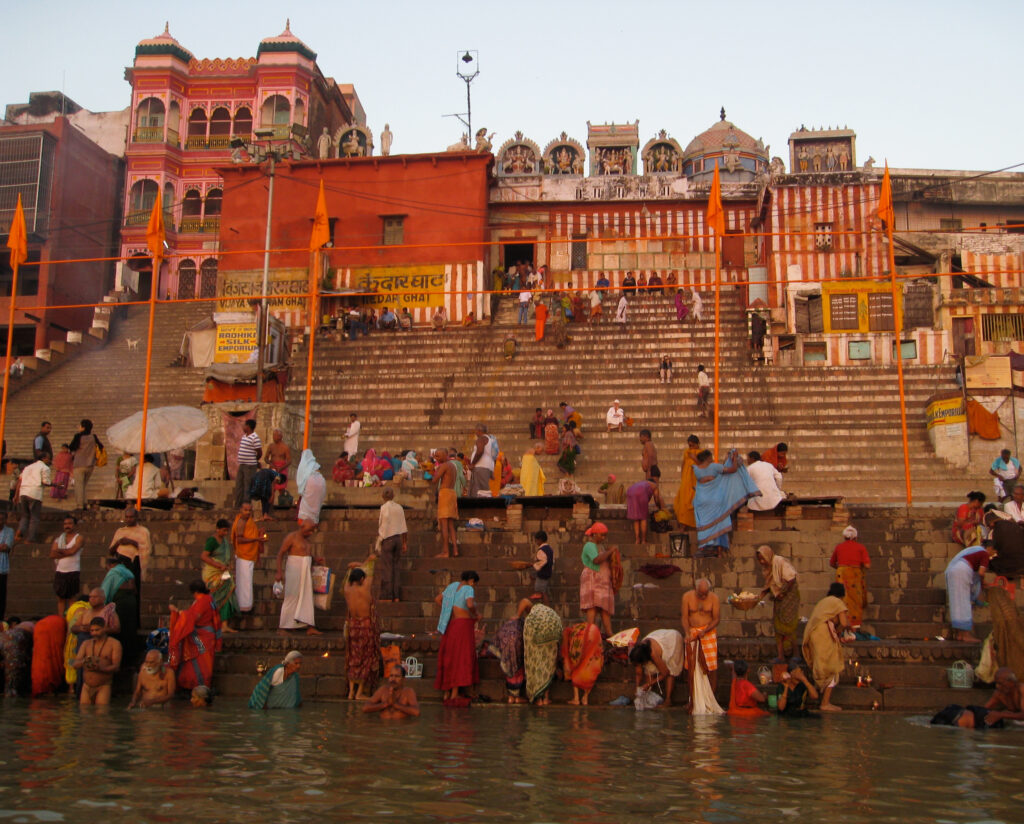
Kedar Ghat represents the fascinating way Varanasi ghats create spiritual connections to distant pilgrimage sites, allowing devotees to earn merit without undertaking arduous journeys.
The Kedareshwar Temple
This ghat features the Kedareshwar Temple, designed to replicate the famous Kedarnath Temple in the Himalayas—one of the twelve Jyotirlingas (sacred Shiva shrines). Hindu belief holds that bathing at Kedar Ghat and worshiping at its temple provides spiritual benefits equivalent to visiting the actual Kedarnath Temple high in the mountains.
This concept of “substitute pilgrimage” reflects the practical reality that many devotees, particularly elderly or infirm individuals, cannot undertake dangerous Himalayan journeys. The Varanasi ghats thus democratize pilgrimage, making sacred merit accessible to all.
The South Indian Community
Kedar Ghat has traditionally been associated with South Indian pilgrims and priests. The ghat’s colorful architecture, gopuram-style structures, and specific rituals reflect this connection, creating a small piece of South India along the Ganges.
This demonstrates the pan-Indian appeal of Varanasi ghats—people from every corner of the subcontinent have established their presence here, creating a microcosm of India’s religious and cultural diversity.
The Morning Boat Ride: The Ultimate Varanasi Ghats Experience
While walking along the Varanasi ghats offers its own rewards, experiencing them from the river during a sunrise boat ride remains the quintessential way to understand their spiritual significance.
The Pre-Dawn Departure
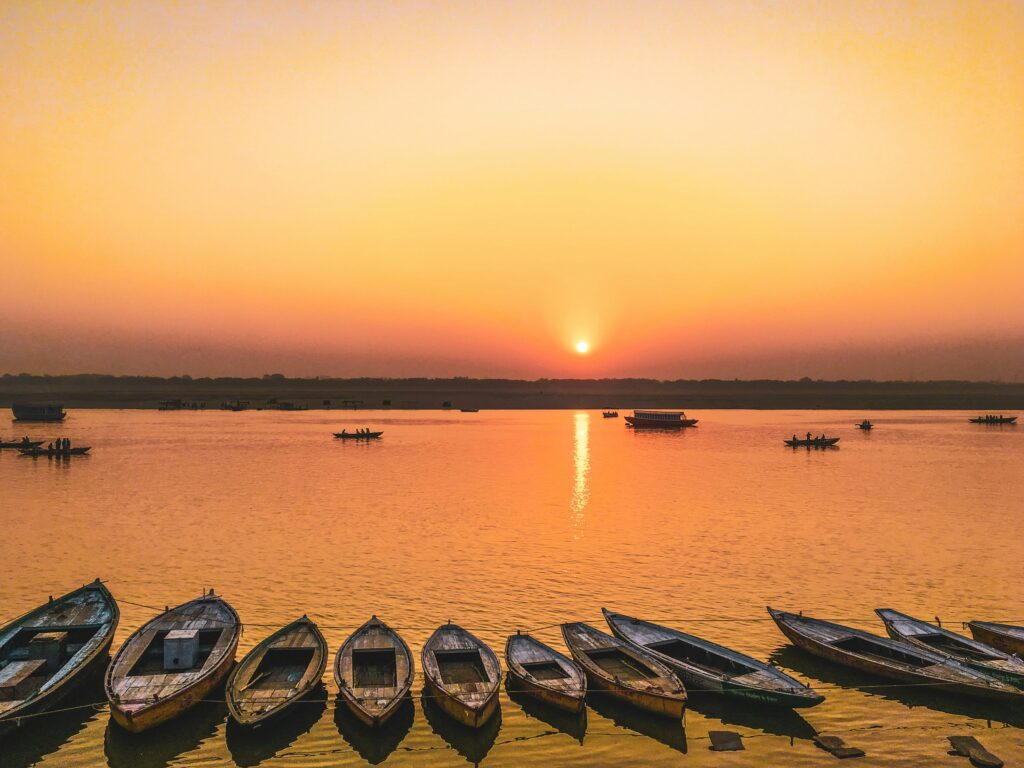
The experience begins before sunrise, around 5:00-5:30 AM, when the city still slumbers under a blanket of pre-dawn darkness. As you settle into a wooden boat with a skilled boatman at the oars, the temperature is cool, the river calm, and the ghats quiet except for early morning devotees beginning their prayers.
The Unfolding Dawn
As the boat glides silently northward along the ghats, the eastern sky begins to lighten. The first rays of sun paint the water golden, while the ghats emerge from shadow into visibility. This is when you truly appreciate the scale and grandeur of the Varanasi ghats—a continuous seven-kilometer stretch of architectural and spiritual magnificence.
Morning prayers echo from the ghats. Bells ring from temples. Pilgrims descend the steps for ritual baths, their colorful saris and dhotis adding visual poetry to the scene. Priests perform ceremonial offerings, flowers float past on the current, and the city gradually awakens to another day of timeless rituals.
What You’ll Witness
From your boat, you’ll observe countless intimate moments of devotion: a elderly woman offering prayers to the rising sun, her palms together in namaste; yogis performing surya namaskar on the steps; priests conducting elaborate pujas; children learning ancient chants from their elders; and at Manikarnika, the eternal flames of cremation pyres reminding you of life’s impermanence.
The boat ride typically lasts 60-90 minutes, covering most major Varanasi ghats from Assi in the south to Manikarnika and beyond. Boatmen, many from families who have plied these waters for generations, provide commentary and insights, pointing out significant ghats and explaining rituals.
Practical Considerations
Boat rides cost anywhere from ₹200-600 per hour depending on season, time of day, and your bargaining skills. Shared boats are cheaper than private ones. The best boats depart from Dashashwamedh Ghat, Assi Ghat, or near your accommodation.
Bring warm clothing in winter as the river breeze can be chilly. A camera is essential, though remember that photography of cremations at Manikarnika is prohibited. Some visitors prefer attending both sunrise boat rides and evening Ganga Aarti from the water to experience the full spectrum of Varanasi ghats spirituality.
The Spiritual Significance: Why Varanasi Ghats Matter
To truly appreciate Varanasi ghats, one must understand their profound role in Hindu spiritual philosophy and practice.
The Concept of Moksha
Hinduism teaches that souls are trapped in samsara—the cycle of birth, death, and rebirth determined by karma. This cycle continues through countless lifetimes until the soul achieves moksha (liberation). Varanasi, and particularly its ghats, offer a unique pathway to this liberation.
The belief that dying in Varanasi grants moksha draws elderly Hindus from across India to spend their final days here. Some stay in dharamshalas (pilgrim rest houses) near the ghats, others in hospices specifically designed for this purpose. This practice, called “Kashi Labh” (gaining Kashi), reflects profound faith in the city’s spiritual power.
The Purifying Waters
The Ganges is not merely a river but a goddess—Ganga Mata (Mother Ganges)—whose waters possess the power to cleanse spiritual impurities accumulated across lifetimes. Ritual bathing at Varanasi ghats, particularly during auspicious astrological periods, is believed to wash away sins and create positive karma.
Scientists may debate the physical purity of the river (and indeed, pollution is a serious concern), but for devotees, the spiritual purity transcends physical qualities. The act of bathing represents surrender to the divine and faith in cosmic cleansing powers.
The Three-Fold City
Hindu texts describe Varanasi as Triyuginarayan—the city of three worlds. It exists simultaneously in the physical realm (where mortals walk), the subtle realm (where gods and ancestors dwell), and the causal realm (the domain of ultimate reality). The Varanasi ghats serve as the interface between these dimensions.
When pilgrims descend the ghat steps into the Ganges, they’re not simply entering a river—they’re crossing dimensional boundaries, stepping into sacred geography where ordinary physical laws don’t fully apply and spiritual transformation becomes possible.
Practical Guide: Experiencing Varanasi Ghats
Best Time to Visit Varanasi Ghats
Winter (November to February): This is unquestionably the best season for exploring Varanasi ghats. Temperatures range from 5°C to 15°C during this period, making outdoor activities comfortable. The pleasant weather allows you to spend hours walking along the ghats, attending ceremonies, and taking boat rides without physical discomfort.
Winter coincides with major festivals like Dev Deepawali (November), when all Varanasi ghats are illuminated with millions of earthen lamps in a spectacle beyond description. Makar Sankranti (January) brings colorful kite festivals and massive bathing crowds. Mahashivratri (February-March) sees overnight celebrations at Shiva temples near the ghats.
The crisp winter air, clear skies, and festive atmosphere make this peak tourist season—book accommodations well in advance and expect crowds at popular ghats.
Monsoon (July to October): The monsoon presents Varanasi ghats in a completely different light. Heavy rains swell the Ganges, with water levels rising dramatically to submerge lower steps. The swollen river, rushing powerfully between flooded ghats, displays nature’s raw force.
Fewer tourists visit during monsoon, offering a more authentic and less commercialized experience. The rain-washed ghats glisten, and the surrounding landscape turns lush green. However, some activities may be curtailed due to high water levels and slippery conditions. Photography enthusiasts often love this season for its dramatic atmospheric effects.
Summer (March to June): Summer at Varanasi ghats is brutally hot, with temperatures soaring to 45°C. The intense heat makes daytime visits uncomfortable, and the strong sun reflecting off stone surfaces can be overwhelming.
However, budget travelers benefit from significantly lower accommodation costs, fewer crowds, and more personal space at the ghats. If visiting during summer, schedule activities for early morning (before 8 AM) and late evening (after 6 PM), spending the scorching midday hours indoors.
How to Reach Varanasi
By Air: Lal Bahadur Shastri International Airport, located 22 kilometers from the city center, operates both domestic and limited international flights. Major cities like Delhi, Mumbai, Kolkata, Bangalore, and Hyderabad have direct connections. From the airport, pre-paid taxis and app-based cab services take approximately 45 minutes to reach the Varanasi ghats area.
By Train: Varanasi Junction (Varanasi Cantt Railway Station) is a major rail hub with connections to virtually every corner of India. Important trains include Kashi Vishwanath Express from Delhi, Mahanagari Express from Mumbai, and Purva Express from Kolkata. Pandit Deen Dayal Upadhyaya Junction (formerly Mughal Sarai), 18 kilometers away, serves as another major railhead with excellent connectivity.
By Road: National Highways 2, 7, 29, and 56 connect Varanasi to major cities. State-run and private buses operate from cities like Lucknow, Allahabad, Patna, and Gorakhpur. However, road travel can be time-consuming, and the highways, while functional, aren’t always in optimal condition.
Where to Stay Near Varanasi Ghats
Staying at the Ghats: Numerous guesthouses, homestays, and heritage hotels line the Varanasi ghats themselves, particularly around Assi Ghat and in the lanes behind Dashashwamedh Ghat. These accommodations offer unbeatable proximity to the action—you can literally step out your door onto ancient sacred steps.
However, be aware that properties directly on the ghats often have limited vehicle access. You may need to walk through narrow lanes with luggage, buildings may be old with basic amenities, and noise from ceremonies and activities continues late into the night.
Mid-Range Options: The Assi Ghat area has developed into a hub for comfortable mid-range hotels offering modern amenities while maintaining proximity to the ghats. This area balances accessibility, comfort, and authentic atmosphere well.
Luxury Options: Several upscale hotels and heritage properties exist in Varanasi, some with stunning views of the Varanasi ghats from their terraces or rooms. While farther from the immediate ghat area, they provide superior comfort, services, and facilities for those prioritizing accommodation quality.
Getting Around
Walking: The Varanasi ghats themselves are best explored on foot. The entire ghat stretch is pedestrian-friendly (though crowded), and walking allows you to stop wherever something catches your interest, interact with locals, and experience the atmosphere at a human pace.
Cycle Rickshaws: For moving between ghats or to locations in the old city, cycle rickshaws provide an authentic, eco-friendly option. They can navigate narrow lanes that cars cannot access.
Auto Rickshaws: For longer distances or moving between the ghat area and other parts of Varanasi like Sarnath or the airport, auto rickshaws are convenient. Always agree on the fare before starting or insist on using the meter.
Boat: Moving between ghats via boat offers a unique perspective and is actually faster than walking the often-crowded banks. You can hire boats for point-to-point travel or extended river tours.
What to Pack
Modest Clothing: Respect for sacred sites demands conservative dress. Pack clothes covering shoulders and knees. Women should bring scarves or shawls. Comfortable walking shoes essential for navigating uneven ghat steps are a must.
Sun Protection: Even in winter, the sun reflecting off water and stone can be intense. Bring sunscreen, sunglasses, and hats. In summer, these become absolutely critical.
Cash: While digital payments are increasingly accepted, many vendors at Varanasi ghats, particularly flower sellers, boatmen, and small shops, operate on cash only. ATMs exist throughout the city, but it’s wise to carry sufficient cash when spending time at the ghats.
Camera: The Varanasi ghats offer endless photographic opportunities. Bring appropriate equipment, extra batteries, and memory cards. Remember that photography is prohibited at cremation ghats.
Cultural Sensitivity and Etiquette at Varanasi Ghats
Respecting Sacred Spaces
The Varanasi ghats are active religious sites, not theme parks. Thousands of people come here daily for deeply personal spiritual practices. Your presence should enhance, not detract from, the sacred atmosphere.
Observe rituals with quiet respect. Don’t interrupt ceremonies, push through crowds of worshipers, or conduct yourself in ways that mock or trivialize religious practices. What seems exotic to you is profound faith to others.
Photography Guidelines
While photography is generally permitted at most Varanasi ghats, certain guidelines apply:
Never photograph: Cremation rituals at Manikarnika or Harishchandra Ghats. This is strictly prohibited and deeply disrespectful.
Always ask permission: Before photographing individuals, especially during prayer or bathing. Most people don’t mind, but assuming consent is rude.
Be discreet: Use zoom lenses rather than getting in people’s faces. The goal is to observe and document, not to make subjects uncomfortable.
Consider not photographing: Some moments are so sacred or intimate that witnessing them fully present, without a camera mediating the experience, honors them better.
Appropriate Behavior
Dress modestly as mentioned earlier. Revealing clothing is not only culturally inappropriate but may attract unwanted attention and mark you as disrespectful.
Remove shoes when entering temple areas on the ghats. Many worship spaces require this as a sign of respect.
Don’t smoke, drink alcohol, or eat meat openly at the ghats. While Varanasi has restaurants serving all these, consuming them at sacred sites offends religious sensibilities.
Avoid public displays of affection. Indian culture, especially in religious contexts, considers such behavior inappropriate.
Dealing with Touts and Scams
The immense popularity of Varanasi ghats unfortunately attracts people seeking to exploit tourists. Common scams include:
Unauthorized guides offering services at inflated prices. Hire guides through your hotel or official tourism offices.
Overpriced boat rides. Agree on prices before boarding. Standard rates exist, though they vary by season.
Pushy priests demanding large donations for pujas. Politely decline if uncomfortable, and never feel obligated to pay more than you wish.
Silk shop scams where rickshaw drivers or touts take you to “their uncle’s shop” for commission. Buy only from shops you choose independently.
Stay alert but don’t let fear of scams prevent you from engaging authentically with locals. Most people you’ll meet are genuinely kind and helpful.
Understanding the Spiritual Experience
For non-Hindu visitors, the intensity of rituals at Varanasi ghats can be overwhelming or confusing. You don’t need to believe in Hindu theology to respectfully appreciate what you’re witnessing.
Try to understand the emotional and spiritual significance these practices hold for participants. What might seem strange or irrational from outside is deeply meaningful within its cultural context. Approach with curiosity and respect rather than judgment.
If you feel moved to participate in simple rituals like offering flowers to the river or attending the Ganga Aarti, you’re generally welcome to do so. Such participation, when done respectfully, often enriches the experience.
The Environmental Challenge: Pollution at Varanasi Ghats
Any honest discussion of Varanasi ghats must address the significant environmental challenges facing the Ganges River.
The Reality of Pollution
Industrial waste, sewage, and religious offerings have severely polluted the Ganges, particularly at Varanasi. Scientific studies show that the river’s bacterial content far exceeds safe levels, and chemical pollutants pose health risks.
The visual evidence is often apparent—floating debris, discolored water, and unpleasant odors at certain times. For visitors accustomed to pristine waters, this can be shocking and may conflict with the river’s sacred reputation.
The Government Response
Successive governments have launched cleanup initiatives, most notably the Namami Gange project initiated in 2014. This multi-billion-dollar program aims to prevent industrial effluent from entering the river, upgrade sewage treatment facilities, and promote riverbank conservation.
Progress has been made—several sewage treatment plants now operate around Varanasi, river monitoring systems have improved, and public awareness campaigns have increased. However, the challenge remains enormous, and complete restoration will take years of sustained effort.
The Devotee Perspective
Interestingly, the physical pollution doesn’t diminish the river’s spiritual significance for most devotees. Many believe that Ganga’s sacred nature operates on a different level than physical chemistry—that her spiritual purity exists regardless of material contamination.
This doesn’t mean devotees don’t care about pollution. Many are actively involved in cleanup efforts and strongly support environmental protection. Rather, it reflects a complex worldview where spiritual and physical realities operate according to different laws.
Responsible Tourism
As a visitor to Varanasi ghats, you can contribute positively:
Don’t throw non-biodegradable items in the river. If you participate in flower offerings, choose loose flowers over plastic-wrapped packages.
Support eco-friendly businesses and accommodations that demonstrate environmental responsibility.
Respect cleanup efforts. If you see workers cleaning the ghats or river, appreciate their efforts and don’t undermine them by littering.
Beyond Varanasi Ghats: Other Attractions in the Sacred City
While the Varanasi ghats deserve multiple days of exploration, Varanasi offers other remarkable sites worth visiting.
Kashi Vishwanath Temple
One of Hinduism’s twelve Jyotirlingas, this temple dedicated to Lord Shiva sits in the heart of old Varanasi. The temple’s golden spire dominates the skyline, and its spiritual significance draws millions of pilgrims annually.
Recent extensive renovations and the creation of a new approach corridor have transformed access to the temple, making it more visitor-friendly while preserving its sacred character. Non-Hindus are not permitted inside the inner sanctum, but the entire area around the temple buzzes with spiritual energy.
Sarnath: Where Buddha Taught
Located just 10 kilometers from the Varanasi ghats, Sarnath marks the spot where Buddha delivered his first sermon after attaining enlightenment. This Buddhist pilgrimage site offers a stark contrast to the Hindu atmosphere of the ghats.
The archaeological complex includes the Dhamek Stupa, ancient monasteries, and a museum housing remarkable Buddhist artifacts. The serene atmosphere and historical significance make Sarnath an essential complement to the intensity of the ghats.
Banaras Hindu University
One of Asia’s largest residential universities, BHU’s sprawling campus features beautiful architecture, museums, and the impressive Bharat Kala Bhavan museum with extensive collections of miniature paintings, sculptures, and textiles.
The campus provides insight into Varanasi’s role as a center of learning and culture beyond its religious identity.
Ramnagar Fort
Across the river from the Varanasi ghats, this 18th-century fort serves as the ancestral home of the Maharaja of Varanasi. The fort’s museum displays vintage cars, royal costumes, weapons, and palanquins, offering glimpses into royal life.
During the annual Ram Lila festival in September-October, the grounds host spectacular performances of the Ramayana epic—a tradition maintained for over 200 years.
The Timeless Rhythm: A Day in the Life of Varanasi Ghats
To truly understand Varanasi ghats, imagine a typical day along the riverbank:
Pre-Dawn (4:00-6:00 AM): The ghats slowly awaken. Early-rising devotees descend for ritual baths. Boatmen prepare for sunrise tours. Priests begin morning pujas. The first rays of light bring the ancient stones to life.
Morning (6:00-10:00 AM): The busiest time arrives. Thousands bathe in the Ganges, their prayers echoing across the water. Laundry workers pound clothes on the steps. Children play in the shallows under watchful parental eyes. Sadhus perform yoga and meditation. The morning rituals at Assi Ghat unfold with music and devotion.
Midday (10:00 AM-4:00 PM): Activity decreases as heat intensifies. Some ghats become relatively quiet. Locals rest in the shade. Tourists explore more leisurely. The more dedicated pilgrims continue their spiritual practices despite the sun.
Afternoon (4:00-6:00 PM): Life returns as temperatures moderate. People gather for conversation and tea. Street vendors set up stalls. Boat traffic increases. The ghats prepare for the evening spectacle.
Evening (6:00-8:00 PM): The magical hour arrives. Thousands converge on Dashashwamedh for Ganga Aarti. Lamps illuminate the gathering darkness. Bells, drums, and chants fill the air. Floating diyas drift downstream, carrying prayers and wishes.
Night (8:00 PM onward): Most activity ceases, though Manikarnika’s cremation fires burn eternally. Some ghats host smaller ceremonies or private prayers. The river reflects moonlight and distant lamps. A profound peace descends, punctuated by temple bells marking the hours.
This rhythm, maintained for millennia, continues unchanged by modernity—a living connection to ancient India.
Festivals at Varanasi Ghats: Celebrations of the Sacred
Several major festivals transform Varanasi ghats into even more spectacular spaces of celebration and devotion.
Dev Deepawali (November)
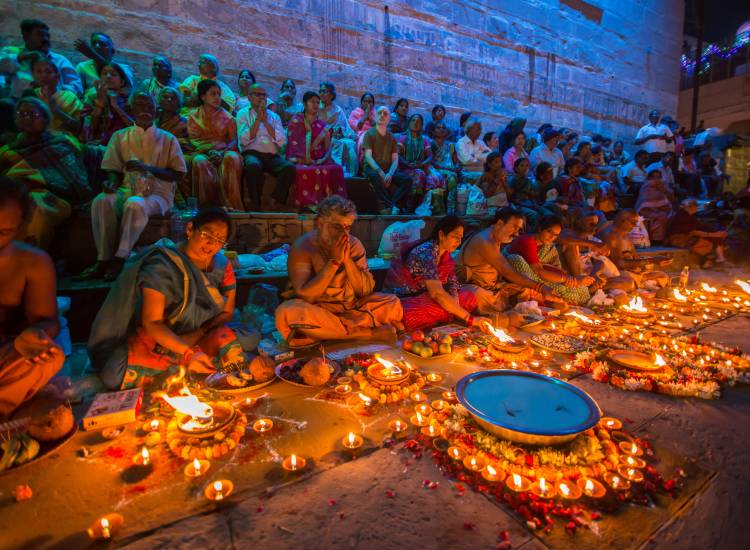
Celebrated fifteen days after Diwali, Dev Deepawali is considered the most spectacular festival at Varanasi ghats. According to legend, gods descend to earth on this night to bathe in the Ganges.
The entire seven-kilometer stretch of ghats is illuminated with millions of earthen lamps. Every step glows with flame, creating a river of light along the Ganges bank. The reflection in the water doubles the effect, making the scene utterly magical.
Special boat processions, extended Ganga Aartis, and cultural performances occur throughout the night. The crowds are enormous, but the atmosphere of collective celebration makes the press of humanity part of the experience.
Mahashivratri (February-March)
The great night of Shiva brings massive crowds to Varanasi ghats, particularly those near Shiva temples. Devotees fast, pray, and stay awake all night chanting mantras and singing bhajans (devotional songs).
The bathing in Ganges on Mahashivratri is considered especially auspicious. Sadhus from across India converge on Varanasi, many performing elaborate tantric rituals at the ghats.
Kartik Purnima (October-November)
This full moon night marks the culmination of the holy month of Kartik. Devotees light lamps, perform special pujas, and take ritual baths at Varanasi ghats. The atmosphere resembles a gentler version of Dev Deepawali, with deep spiritual significance.
Ganga Dussehra (May-June)
This ten-day festival celebrates the descent of Ganga from heaven to earth. Each day, special rituals occur at the ghats, culminating in mass bathing on the tenth day. The belief holds that bathing during Ganga Dussehra can remove ten sins or ten lifetimes of sins.
The Eternal City: Why Varanasi Ghats Endure
In an age of rapid change, where ancient cities modernize and traditional cultures fade, Varanasi ghats remain remarkably unchanged. Why?
Living Tradition
Unlike archaeological sites preserved as museums, the Varanasi ghats are living spaces where traditions continue unbroken. Each generation inherits practices from the previous one, maintaining continuity across centuries. This isn’t heritage conservation—it’s simply how people live.
Spiritual Magnetism
The belief that dying and being cremated here grants moksha creates a constant flow of pilgrims. This spiritual economy sustains the ghats, their priests, the cremation workers, the boatmen, and countless others whose livelihoods depend on the city’s sacred status.
Cultural Identity
For millions of Hindus worldwide, Varanasi represents the spiritual heart of their civilization. Protecting and preserving the Varanasi ghats isn’t just about maintaining old buildings—it’s about preserving identity, continuity, and connection to something larger than individual lives.
Universal Appeal
Even non-Hindus often find the ghats profoundly moving. The raw honesty about death, the celebration of life, the devotional intensity, and the sheer human drama create experiences that transcend cultural boundaries. The Varanasi ghats speak to universal human concerns—meaning, purpose, mortality, and transcendence.
Practical Photography Tips for Varanasi Ghats
For photography enthusiasts, Varanasi ghats offer endless opportunities. Here are tips to capture their essence:
Timing is Everything
Blue Hour: The hour before sunrise and after sunset provides the most dramatic lighting. The soft, diffused light during these times creates magical atmospheric effects.
Harsh Midday Sun: Usually avoided by photographers, but at the ghats, the strong overhead light can create interesting high-contrast images with deep shadows and bright highlights.
Equipment Considerations
Wide-Angle Lens: Essential for capturing the scale of the ghats and the crowds during ceremonies.
Telephoto Lens: Allows respectful distance while photographing individual portraits and ritual details.
Fast Lens: The low-light conditions during morning and evening require lenses with wide apertures (f/2.8 or wider).
Composition Techniques
Leading Lines: Use the ghat steps as leading lines drawing the eye into the composition.
Reflections: The Ganges offers beautiful reflection opportunities, especially during calm morning waters.
Silhouettes: During sunrise and sunset, backlighting creates dramatic silhouettes of people performing rituals.
Layers: Incorporate foreground, middle ground, and background elements to create depth and context.
Ethical Photography
People Over Pictures: If capturing a shot requires disrupting someone’s prayer or pushing through a crowd, the shot isn’t worth it.
Share Benefits: If you photograph local boatmen, priests, or vendors and the images might have commercial value, consider offering compensation or sharing prints.
Represent Truthfully: Avoid manipulating images in ways that misrepresent the reality of life at Varanasi ghats, whether that means hiding pollution or artificially enhancing spirituality.
Conclusion: The Eternal Dance of Life and Death
Standing at the edge of the Ganges, watching the rituals unfold along the Varanasi ghats, you witness something rare in the modern world—a place where ancient and contemporary exist simultaneously, where the sacred and mundane interweave seamlessly, where life and death dance together in eternal rhythm.
The Varanasi ghats challenge comfortable assumptions about progress, modernity, and rationality. They insist that mystery, faith, and ritual still matter. They declare that some truths are found not through analysis but through participation, not through observation but through surrender.
Whether you approach as a devout pilgrim seeking spiritual merit, a curious traveler wanting to understand India’s soul, a photographer chasing perfect light, or simply someone drawn to places where time seems to operate differently, the Varanasi ghats offer experiences that linger long after you’ve left.
You might never fully understand what you witness here—the absolute faith that moves someone to cremate their loved one at Manikarnika, the devotion that brings people to bathe in these polluted waters, the serenity in faces of those who’ve come to spend their final days waiting for death’s release. But perhaps understanding isn’t the point.
Perhaps the gift of Varanasi ghats is simply this: the reminder that beneath all our differences of belief, culture, and circumstance, we share fundamental questions about existence, mortality, and meaning. And sometimes, the most profound answers come not through words but through witnessing—being present in spaces where humanity has gathered for thousands of years to honor the mystery of life itself.
The steps await. The river flows eternal. The bells ring across the water. And the ancient city continues its timeless conversation between heaven and earth, inviting all who listen to join the eternal dialogue.