
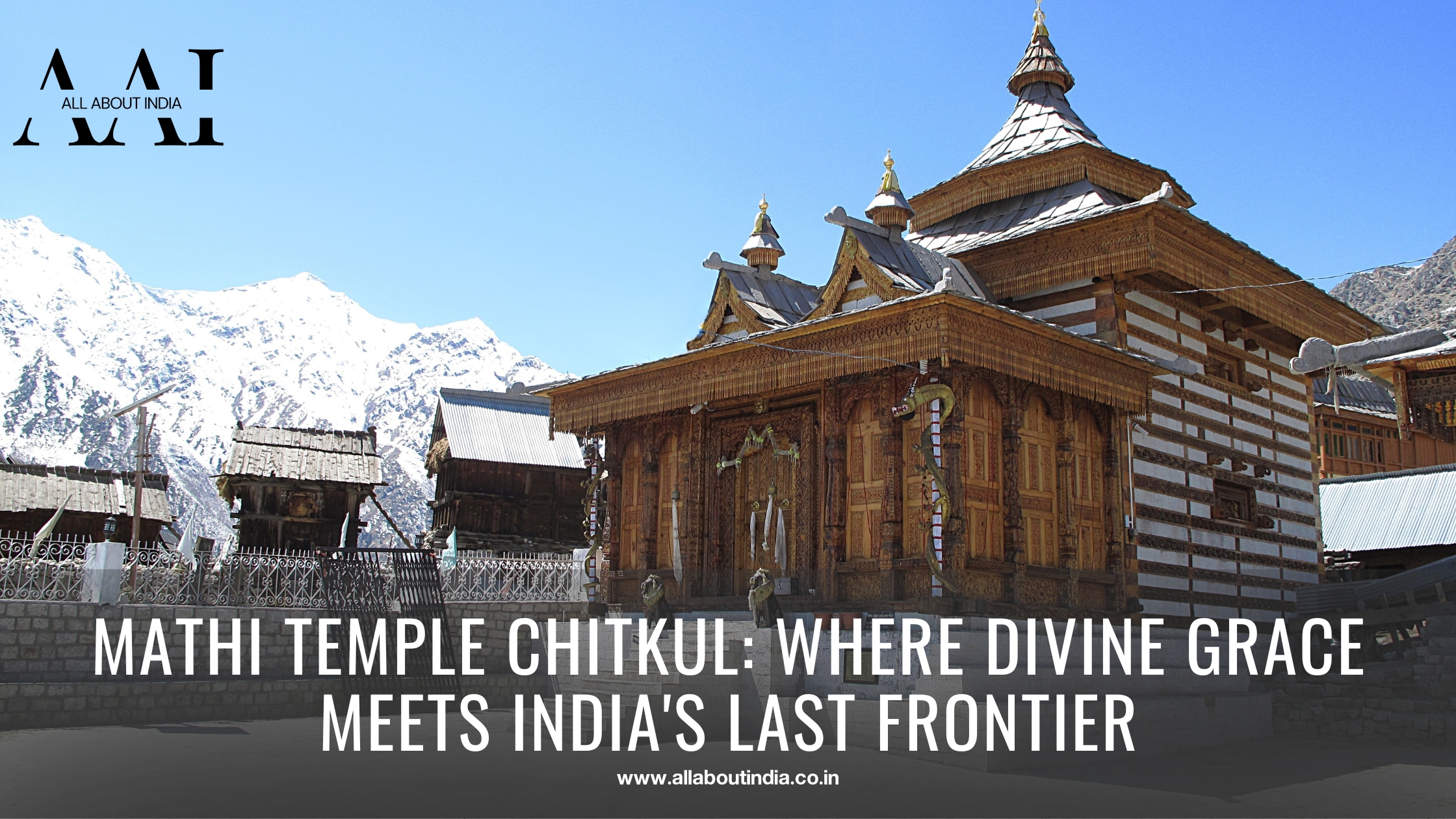
Perched at an altitude of 3,450 meters in the breathtaking Kinnaur district of Himachal Pradesh, the Mathi Temple Chitkul stands as a testament to centuries of unwavering faith and cultural heritage. This ancient shrine, dedicated to Goddess Mathi Devi, holds a special place in the hearts of locals and travelers alike, serving as the spiritual guardian of Chitkul—India’s last inhabited village before the Indo-Tibetan border.
The temple’s weathered wooden beams whisper tales of divine intervention, legendary journeys across the Himalayas, and the enduring bond between a goddess and her people. Whether you’re a spiritual seeker, history enthusiast, or mountain wanderer, Mathi Temple Chitkul offers an experience that transcends ordinary tourism.
The Sacred Legend of Mathi Devi: A Divine Journey Across the Himalayas
The story of Mathi Temple Chitkul begins with a remarkable journey that has been passed down through generations in the valleys of Kinnaur. According to local folklore, Goddess Mathi Devi undertook an arduous pilgrimage from the sacred lands of Vrindavan, traveling through Mathura, Garhwal, and Badrinath before finally reaching the remote heights of Chitkul.
The Goddess Who Chose the Mountains
Legend speaks of how Mathi Devi, believed to be the divine consort of Lord Badrinath, set out on a mission to protect the seven divisions of the Kinnaur valley. As she journeyed through the rugged Himalayan terrain, she appointed guardians for each region she passed—assigning responsibilities to family members and local deities who would watch over the land in her name.
At Chasu village, she entrusted her nephew Narenas with protection duties. When she reached Kamru Fort, she found Lord Badrinath himself safeguarding the throne of Bushahr. In Rakchham, she appointed Shamshares as guardian, while Barang Nag was given charge of Rupin Ghati. After securing all these divisions, the goddess finally arrived at Chitkul and made it her permanent abode.
The Transformation of Chitkul
Local belief holds that Mathi Temple Chitkul became the focal point of prosperity and abundance after the goddess’s arrival. The once-struggling village transformed into a thriving community—crops flourished, cattle found better grazing lands, and the people experienced unprecedented well-being. This transformation cemented Mathi Devi’s position as the beloved protector of Kinnaur, with her influence extending far beyond Chitkul’s boundaries.
Even today, villagers credit the goddess with safeguarding their homes during natural disasters, harsh winters, and challenging times. Her presence is felt in every aspect of daily life in this remote Himalayan settlement.
Architectural Marvel: The Kath-Kuni Style of Mathi Temple Chitkul
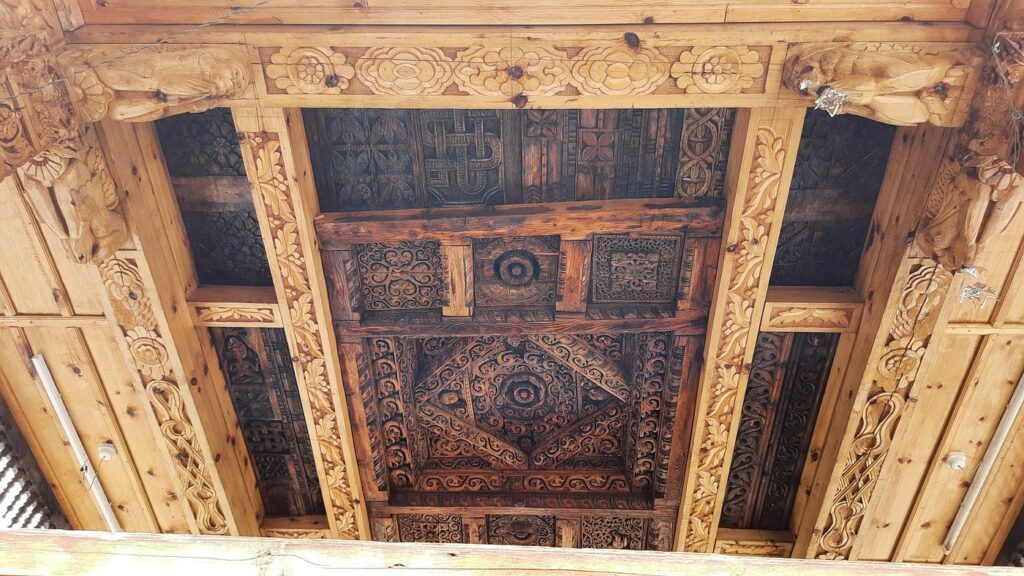
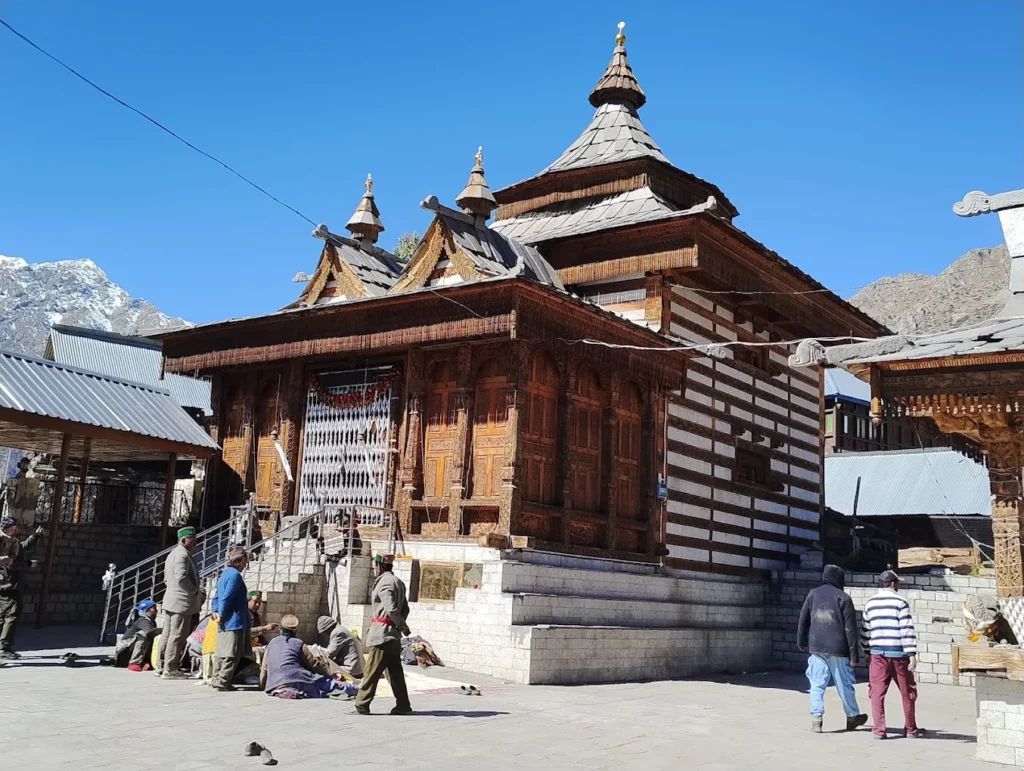
The Mathi Temple Chitkul showcases the distinctive Kath-Kuni architectural style—a traditional Himalayan building technique that has survived for centuries in these mountain regions. This unique construction method combines earthquake-resistant design with aesthetic beauty, creating structures that harmonize perfectly with the surrounding landscape.
Understanding Kath-Kuni Architecture
The temple’s construction employs alternating layers of stone and deodar wood, bound together without the use of nails or modern fasteners. This ingenious technique allows the structure to flex during seismic activity, making it remarkably stable despite its location in an earthquake-prone region. The walls are thick, providing excellent insulation against the extreme cold that grips Chitkul for much of the year.
Intricate Woodwork and Divine Symbols
What truly sets Mathi Temple Chitkul apart is its exquisite wooden craftsmanship. The temple’s exterior features intricate carvings that depict various mythological scenes, floral patterns, and traditional Kinnauri motifs. Dragon-like figures adorn the doorways and corners—symbolic guardians that blend Buddhist and Hindu iconography, reflecting the cultural syncretism of the Kinnaur region.
The temple’s sloping roof, crafted from wooden planks and traditional tiles, is designed to shed heavy snow loads during the brutal winter months. Every architectural element serves both functional and aesthetic purposes, creating a structure that has withstood the test of time.
The Sacred Ark
At the heart of the temple complex lies a remarkable artifact—a ceremonial ark crafted from walnut wood. This portable shrine houses the symbolic representation of Goddess Mathi Devi and is used during religious processions and festivals. The ark is adorned with layers of colorful cloth and decorated with a tuft of yak tail, signifying the goddess’s connection to the high Himalayan regions.
Two wooden poles are permanently attached to the ark, allowing devotees to carry it on their shoulders during special ceremonies. This ancient practice continues to this day, maintaining traditions that date back centuries.
The Three Temples Complex: A Sacred Trinity
The Mathi Temple Chitkul site actually consists of three separate temple structures, each with its own historical significance and spiritual energy. This trinity of shrines creates a powerful sacred space in the heart of the village.
The Ancient Shrine
The oldest of the three temples is believed to have been constructed around the 5th century BC, making it one of the most ancient religious structures in the Kinnaur region. Some historical accounts suggest it was built approximately 500 years ago by settlers from Garhwal, while local oral traditions claim even greater antiquity.
This primary shrine serves as the main worship center where daily rituals are performed. The sanctum sanctorum houses representations of Maha Kali, Maha Lakshmi, and Maha Saraswati—three manifestations of divine feminine energy that together embody the complete spectrum of spiritual power.
The Supporting Temples
The two newer temples, built in subsequent centuries, complement the main shrine and provide additional space for community gatherings and religious ceremonies. Together, these three structures create a comprehensive temple complex that serves as the spiritual nucleus of Chitkul village.
Divine Intervention: The 1962 Indo-China War Legend
One of the most powerful stories associated with Mathi Temple Chitkul involves the goddess’s miraculous intervention during a time of national crisis. This account has become an integral part of local heritage and continues to reinforce faith in Mathi Devi’s protective powers.
When Mountains Rose to Defend
During the 1962 Indo-China conflict, as Chinese forces advanced through the treacherous Himalayan passes toward Indian territory, something extraordinary happened near Chitkul. Locals recount how massive landslides suddenly blocked the mountain passes, creating natural barricades that prevented enemy forces from advancing further.
Boulders the size of houses tumbled down mountainsides, and entire cliff faces collapsed, sealing off routes that had been passable just hours before. While military historians might attribute this to natural geological instability triggered by the conflict, the people of Chitkul hold a different belief—that Mathi Devi herself raised the mountains to protect her land and people.
This legend has been passed down through generations with conviction and pride. Veterans and elders speak of it not as myth, but as living memory—a testament to the goddess’s unwavering commitment to safeguarding her domain.
The Sacred Annual Pilgrimage: A Journey to Gangotri
One of the most fascinating aspects of Mathi Temple Chitkul is the unique tradition of the goddess’s annual journey—a custom that sets this deity apart from virtually all other temple worship practices in India.
Six Months in Two Homes
Every year, as winter tightens its grip on the high Himalayas, Mathi Devi embarks on a remarkable pilgrimage. The temple closes for six months while the goddess travels across the treacherous Lamkhaga Pass—standing at an elevation of 5,300 meters—to reach the sacred sites of Gangotri and Badrinath in Uttarakhand.
This trans-Himalayan route is notoriously dangerous, with extreme weather, avalanche risks, and technical climbing challenges. Yet, according to tradition, the goddess makes this journey accompanied by a small group of chosen villagers—typically eight to nine individuals selected through divine indication.
Protected Passage
The most miraculous aspect of this tradition is the claim that no harm ever comes to those who accompany the goddess on her annual journey. Despite the objective dangers of the route, devotees maintain that every pilgrim returns safely, protected by Mathi Devi’s divine grace.
When the pilgrimage party reaches the sacred pond at Gangotri, the goddess’s mask—her primary symbolic representation—is ritually bathed in the holy waters. Local lore states that the mask rises from the water of its own accord once the purification is complete, signaling the goddess’s acceptance of the offering.
This extraordinary tradition creates a spiritual connection between Himachal Pradesh and Uttarakhand, uniting two Himalayan regions through shared devotion.
Worship Rituals and Spiritual Practices at Mathi Temple Chitkul
The daily worship at Mathi Temple Chitkul follows ancient traditions that have been carefully preserved through generations. Understanding these practices offers insight into the living spiritual culture of the Kinnaur region.
Morning Ablutions and Daily Prayers
Each day begins with the ritual ablution of the deity’s symbolic representations. Temple priests perform these ceremonies with meticulous care, using water from sacred sources and offering fresh flowers, incense, and traditional lamps. The morning prayers are accompanied by devotional music played on traditional instruments—creating an atmosphere of profound tranquility.
Offerings and Wishes
Devotees visiting Mathi Temple Chitkul typically offer red flags, coconuts, and sweets—items considered especially pleasing to the goddess. The temple is particularly renowned for granting blessings to childless couples seeking to start families and to those seeking justice in difficult situations.
Many visitors tie colorful cloth strips to designated trees near the temple, each representing a prayer or wish. As the Himalayan winds cause these prayer flags to flutter, believers hold that their intentions are carried to the divine realm.
Restrictions and Reverence
As with many ancient Himalayan shrines, Mathi Temple Chitkul maintains certain traditional restrictions. Visitors must remove footwear before entering the temple grounds—a practice that demonstrates respect and humility before the divine.
Entry into the innermost sanctum is restricted, with only designated priests allowed direct proximity to the main deity. However, devotees can offer prayers and receive darshan (sacred viewing) from a respectful distance, allowing everyone to experience the temple’s spiritual energy while preserving its sacred boundaries.
The Annual Mathi Mela: A Celebration of Faith and Culture
The Mathi Temple Chitkul becomes the epicenter of regional celebration during the annual Mathi Mela, typically held in August. This festival brings together communities from across the Kinnaur valley, creating a vibrant showcase of local culture, tradition, and devotion.
Traditional Music and Dance
During the Mela, the temple grounds come alive with performances of traditional Kinnauri folk music and dance. Local artists wear colorful traditional costumes—the distinctive green Pahari caps and intricately woven shawls that are hallmarks of Kinnauri cultural identity.
The rhythmic beats of drums echo through the valley as dancers perform ancient choreographies that tell stories of the goddess, local legends, and the relationship between humans and the Himalayan landscape. These performances are not mere entertainment—they are living expressions of cultural memory and spiritual devotion.
Community Gathering and Social Bonding
The Mathi Mela serves as more than a religious festival—it functions as a crucial social gathering that reinforces community bonds. Villagers who may have spent months isolated in remote settlements use this opportunity to reconnect with family, resolve disputes, and strengthen social networks.
The festival provides a platform where community grievances can be addressed, collective decisions made, and traditional governance practices maintained. This social function highlights how Mathi Temple Chitkul serves not just as a religious site, but as the beating heart of the community itself.
Exploring Chitkul Village: Context for Your Temple Visit
No visit to Mathi Temple Chitkul is complete without experiencing the unique character of Chitkul village itself—India’s last inhabited settlement before the restricted border zone.
The Last Village
Chitkul holds the distinctive title of being India’s final civilian-accessible village before the Indo-Tibetan border. Beyond this point, approximately 90 kilometers separate Chitkul from the actual border, but this territory is under strict military control with the Indo-Tibetan Border Police (ITBP) maintaining security.
This geographical position gives Chitkul a unique atmosphere—a sense of being at the edge of the world, where Indian civilization meets the vast Tibetan plateau. The village’s approximately 600 residents maintain a traditional lifestyle largely unchanged by modern urban influences.
Traditional Architecture and Apple Orchards
As you walk through Chitkul’s narrow lanes toward Mathi Temple Chitkul, you’ll pass traditional wooden houses with intricately carved facades and slate roofs. Many of these structures are hundreds of years old, built using the same Kath-Kuni techniques visible in the temple itself.
The village is surrounded by terraced apple orchards that provide the primary livelihood for most families. During autumn, the entire valley transforms into a sea of red and gold as apples ripen on ancient trees, creating a picturesque backdrop for the temple.
The Baspa River
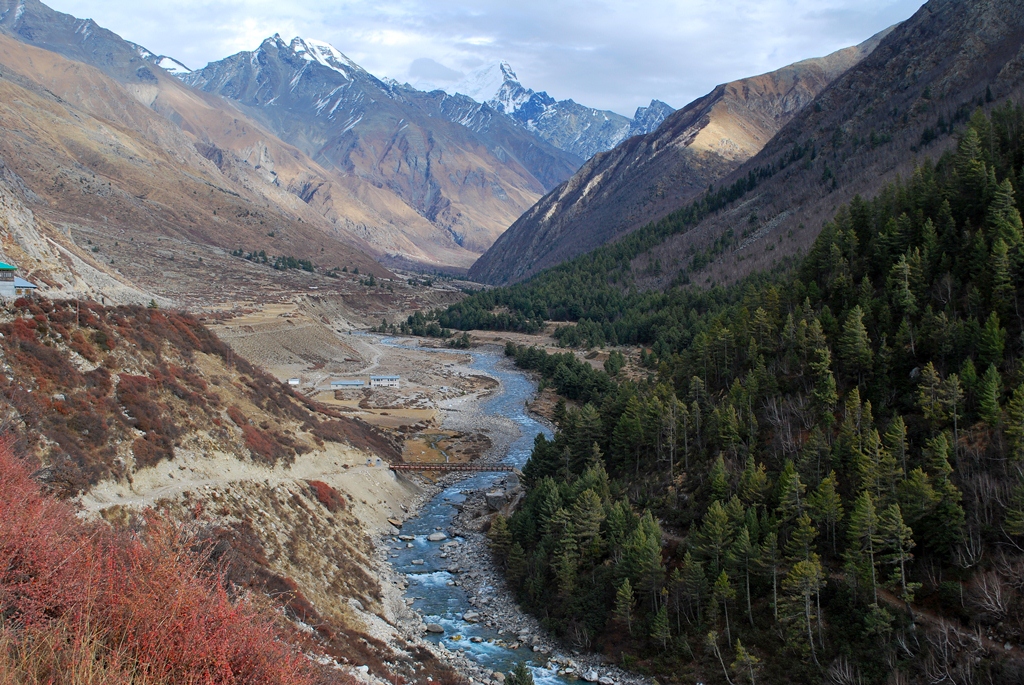
The crystal-clear Baspa River flows alongside Chitkul, its turquoise waters originating from high-altitude glaciers. The river’s gentle murmur provides a constant soundtrack to life in the village, and its banks offer peaceful spots for contemplation and photography.
Many visitors to Mathi Temple Chitkul find that sitting by the Baspa River after their temple visit enhances their spiritual experience—the natural beauty and tranquility of the setting seem to amplify the sense of divine presence.
Planning Your Visit to Mathi Temple Chitkul
Best Time to Visit Mathi Temple Chitkul
The ideal period to visit Mathi Temple Chitkul is from May to October when the road access is open and weather conditions are favorable. Each season within this window offers distinct experiences:
May to June (Spring/Early Summer): This period offers comfortable temperatures ranging from 5°C to 20°C during the day. The snow has melted from most areas, wildflowers bloom across the meadows, and the Baspa River flows with full force from melting glaciers. This is considered one of the best times for visiting Mathi Temple Chitkul as the weather is pleasant without being too crowded.
July to August (Monsoon Season): While the monsoon brings lush greenery to the valley, it also increases the risk of landslides. Roads can be blocked temporarily, and travel may be unpredictable. However, if you don’t mind occasional rain and prefer fewer tourists, this can be a rewarding time to experience Mathi Temple Chitkul in relative solitude. The Mathi Mela festival in August is a major draw during this period.
September to October (Autumn): Many seasoned travelers consider this the absolute best time to visit Mathi Temple Chitkul. The monsoon rains have passed, leaving the landscape vibrant and green. Autumn colors begin appearing in late September, painting the valley in shades of gold, orange, and red. The skies are typically crystal clear, offering spectacular views of the surrounding Himalayan peaks. Temperatures are cool but comfortable, ranging from 0°C to 15°C.
November to April (Winter – Closed): During these months, Chitkul becomes inaccessible as heavy snowfall blocks the roads. The village is largely abandoned as most residents migrate to lower altitudes. Mathi Temple Chitkul closes for the winter, with the goddess undertaking her annual journey to Gangotri. Attempting to visit during this period is not recommended and is often physically impossible.
How to Reach Mathi Temple Chitkul
Reaching Mathi Temple Chitkul requires careful planning due to its remote location. Here are your options:
By Road from Delhi (570 km, 15-18 hours): The most common route follows Delhi → Chandigarh → Shimla → Narkanda → Rampur → Karcham → Sangla → Chitkul. Most travelers break this journey with overnight stops in Shimla or Narkanda. Private vehicles or taxis can be hired for the entire journey, or you can use a combination of buses.
By Bus: Himachal Road Transport Corporation (HRTC) operates buses from Delhi and Chandigarh to various points along the route. Direct buses to Sangla are available but infrequent. More commonly, travelers take buses to Shimla or Reckong Peo, then catch local buses to Sangla (28 km from Chitkul) or directly to Chitkul. From Sangla, HRTC runs buses to Chitkul—typically three services daily during the tourist season.
By Train: The nearest major railway stations are Kalka (300 km) and Chandigarh (350 km). From either location, you can take buses or hire taxis to continue toward Chitkul. The famous toy train from Kalka to Shimla offers a scenic option, though it significantly extends travel time.
By Air: The nearest airports are Shimla Airport (230 km) and Bhuntar/Kullu Airport (260 km). However, flights to these destinations are limited and often weather-dependent. Chandigarh Airport (350 km) offers more frequent connections and may be more practical despite the greater distance. From any of these airports, you’ll need to continue by road.
Where to Stay Near Mathi Temple Chitkul
In Chitkul Village: Several basic guesthouses and homestays operate in Chitkul during the tourist season. Options include small hotels near the Baspa River and family-run accommodations offering simple but clean rooms. Facilities are basic—don’t expect luxury amenities—but the authentic experience and proximity to Mathi Temple Chitkul make up for any lack of modern comforts.
In Sangla Valley: Many travelers prefer staying in Sangla (28 km away), Batseri (20 km away), or Rakcham (13 km away), where accommodation options are more varied and facilities better developed. These locations offer everything from budget homestays to mid-range hotels. Staying here allows you to make a comfortable day trip to Mathi Temple Chitkul while enjoying better amenities.
Practical Tips for Visiting Mathi Temple Chitkul
Cash Requirements: There are no ATMs in Chitkul. The nearest ATM is in Sangla, approximately 28 kilometers away. Carry sufficient cash for your entire stay, as card payment facilities are virtually non-existent in the village.
Mobile Connectivity: Mobile network coverage in Chitkul is extremely limited. BSNL offers the most reliable connection, but even this is restricted primarily to voice calls and SMS. Jio and Airtel may work in Sangla and Batseri, but don’t count on consistent internet connectivity near Mathi Temple Chitkul. Embrace this digital detox as part of your spiritual journey!
What to Pack: Even during summer, temperatures can drop significantly at night. Bring warm clothing including jackets, sweaters, and thermal wear. Comfortable walking shoes are essential as the terrain around Mathi Temple Chitkul can be uneven. Don’t forget sunscreen, sunglasses, and a hat—the high-altitude sun is intense. A basic first-aid kit and any personal medications are crucial, as medical facilities are minimal.
Respect Local Customs: Remove your shoes before entering temple premises. Dress modestly out of respect for the sacred site and local sensibilities. Photography may be restricted in certain areas of Mathi Temple Chitkul—always ask permission before taking photos. Observe silence in the prayer areas and follow any instructions provided by temple authorities or local guides.
Altitude Considerations: At 3,450 meters elevation, some visitors may experience mild altitude-related symptoms such as headaches, breathlessness, or fatigue. Ascend gradually if possible, stay well-hydrated, avoid alcohol, and take it easy on your first day. If you experience severe symptoms, descend to a lower altitude immediately.
Other Attractions Near Mathi Temple Chitkul
Kamru Fort (40 km)
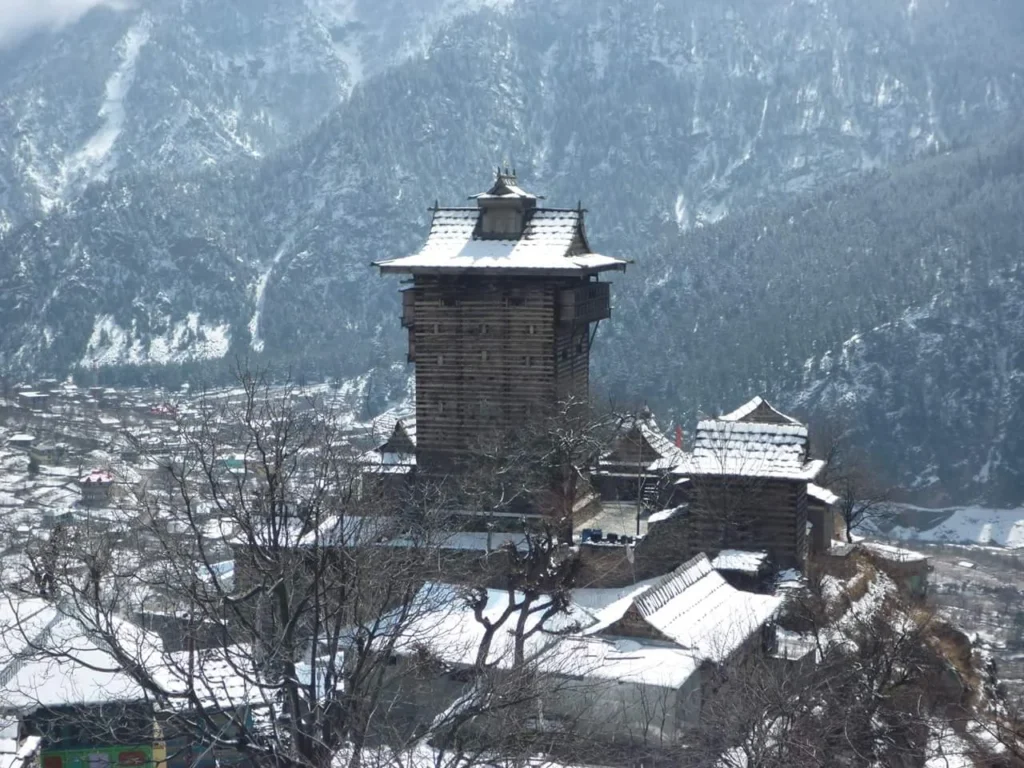
Located in the Sangla valley, this ancient wooden fort is dedicated to Goddess Kamakhya Devi. The fort’s unique architecture and the panoramic views from its elevated position make it worth visiting. Interestingly, visitors must wear a traditional Kinnauri cap and tie a cloth around their waist before entering—a custom that adds to the authentic cultural experience.
Bering Nag Temple (35 km)
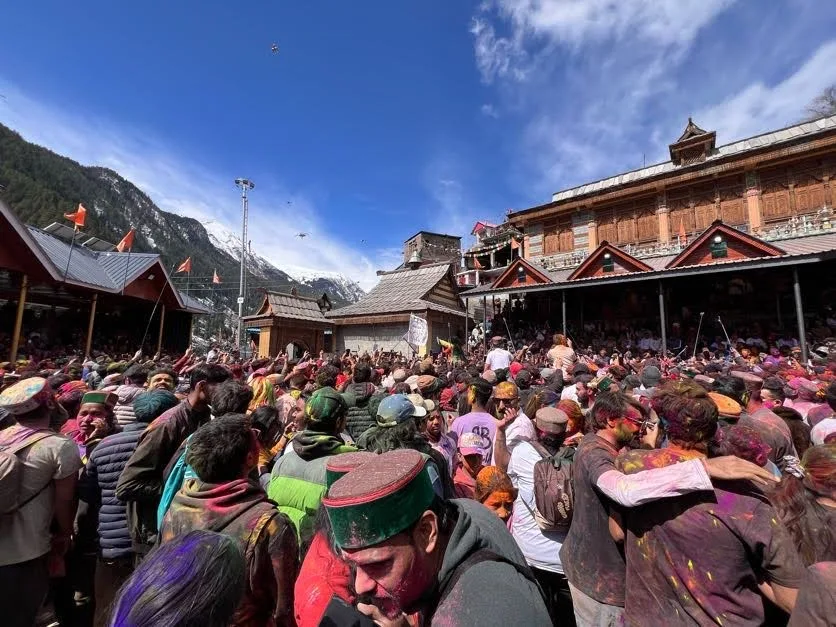
This temple dedicated to Lord Jagas (considered a form of Lord Shiva) is an important pilgrimage site in the Sangla valley. The temple hosts the famous Fulaich Fair between August and September, which showcases traditional Kinnauri culture through folk music, dance, and local customs.
Kagyupa Buddhist Temple (In Chitkul)
Located near Mathi Temple Chitkul, this Buddhist monastery features a highly valued ancient image of Shakyamuni Buddha. The temple reflects the religious syncretism of the Kinnaur region, where Hindu and Buddhist traditions coexist harmoniously. The vibrant exterior and peaceful atmosphere make it a worthy addition to your temple tour.
Sangla Meadows (30 km)
These expansive meadows offer spectacular 180-degree views of the Kinner Kailash range. The rolling grasslands, dotted with wildflowers in summer, provide excellent photography opportunities and peaceful picnic spots. The meadows also offer insights into local agricultural practices and traditional Kinnauri lifestyle.
Rakcham Village (13 km)
This scenic village between Sangla and Chitkul offers pristine natural beauty with fewer tourists. The village is known for its authentic Kinnauri atmosphere, traditional wooden architecture, and proximity to several trekking routes. Consider stopping here on your way to or from Mathi Temple Chitkul.
Trekking Routes from Chitkul
For adventure enthusiasts, Chitkul serves as the base for several challenging Himalayan treks:
Lamkhaga Pass Trek: This high-altitude trek reaches 5,300 meters and connects Himachal Pradesh with Uttarakhand. The route offers stunning views but requires excellent fitness and acclimatization. This is the same route traditionally taken during Mathi Devi’s annual pilgrimage.
Borasu Pass Trek: At 17,880 feet, this trek connects Kinnaur with the Har-ki-Dun valley in Uttarakhand. The route passes through pristine forests, glacial lakes, and high-altitude meadows, offering one of the most spectacular trekking experiences in the Indian Himalayas.
Nagasthi ITBP Post (4 km): For a shorter trek, this route takes you to the Indo-Tibetan Border Police post, offering insights into border security operations and spectacular mountain views.
Ranikanda Meadows (10 km): This moderate trek leads to beautiful high-altitude meadows surrounded by snow-capped peaks—perfect for those wanting a taste of Himalayan trekking without extreme challenges.
Cultural Significance and Local Beliefs
The Goddess as Mother, Warrior, and Healer
The people of Chitkul and surrounding regions view Mathi Devi in multiple divine aspects. As a mother figure, she provides care, sustenance, and unconditional love to her devotees. As a warrior, she stands ready to defend her land and people against any threat—whether natural disasters, military invasions, or personal hardships. As a healer, she grants blessings for health, fertility, and resolution of family conflicts.
This multifaceted divine personality makes Mathi Temple Chitkul relevant to all aspects of life for local communities. Villagers consult the goddess before major decisions, seek her blessings for important life events, and credit her intervention in times of crisis.
Bridge Between Himachal and Uttarakhand
Through her annual pilgrimage tradition, Mathi Devi creates a unique spiritual connection between two Himalayan states. Her worship extends beyond Chitkul, with devotees in parts of Uttarakhand also recognizing her divine authority. This trans-regional reverence highlights how Himalayan spirituality transcends political boundaries, uniting communities through shared beliefs and practices.
Guardian of Traditional Ways
In an era of rapid modernization, Mathi Temple Chitkul stands as a guardian of traditional Kinnauri culture. The temple preserves ancient architectural techniques, maintains centuries-old worship practices, and serves as a living repository of oral traditions and folklore. By visiting and supporting this temple, you contribute to the preservation of this unique cultural heritage.
Environmental and Spiritual Harmony
One of the most striking aspects of Mathi Temple Chitkul is how it embodies the harmonious relationship between spirituality and nature. The temple’s location, nestled amidst apple orchards with the Baspa River flowing nearby and snow-capped peaks forming the backdrop, creates an environment where the boundary between the natural and spiritual worlds seems permeable.
This integration reflects traditional Himalayan worldviews that see mountains, rivers, and forests not as mere natural resources but as sacred entities deserving reverence and protection. The goddess herself is often described in terms that connect her to natural forces—her power associated with mountains, her grace compared to flowing water, her presence felt in the Himalayan winds.
For visitors seeking not just tourism but genuine spiritual experience, this integration of environment and devotion at Mathi Temple Chitkul offers profound insights into alternative ways of relating to the natural world.
Photography Tips for Mathi Temple Chitkul
The stunning setting of Mathi Temple Chitkul provides extraordinary photography opportunities. Here are some tips to capture the temple’s essence:
Golden Hour Magic: Sunrise and sunset transform the temple and surrounding landscape with warm golden light. The wooden architecture particularly glows during these times, creating magical photographic conditions.
Weather Drama: Don’t shy away from photographing during cloudy or partially rainy conditions. Mist rolling through the valley, clouds clinging to mountain peaks, and dramatic skies can create more compelling images than clear blue skies.
Architectural Details: Focus on the intricate wood carvings, the texture of weathered wood and stone, and the unique construction techniques visible in the temple structure.
Cultural Context: Photograph the temple within its environment—include elements like traditional houses, apple orchards, the Baspa River, or local people going about daily activities to provide context and storytelling elements.
Respect Sacred Spaces: Always seek permission before photographing inside temple premises or during worship ceremonies. Some areas may prohibit photography entirely—respect these restrictions as they’re often based on deeply held beliefs about the sanctity of certain spaces.
Why Mathi Temple Chitkul Should Be on Your Spiritual Journey
In an age where mass tourism often diminishes the authenticity of sacred spaces, Mathi Temple Chitkul remains remarkably genuine. Its remote location has protected it from over-commercialization, allowing visitors to experience Himalayan spirituality in a form that has remained largely unchanged for centuries.
The temple offers something increasingly rare in modern life—an opportunity to disconnect from digital distractions, slow down, and experience a different relationship with time, nature, and the sacred. The journey to reach the temple itself becomes part of the pilgrimage, each challenging kilometer along mountain roads building anticipation and deepening the eventual experience of arrival.
Whether you approach Mathi Temple Chitkul as a devout pilgrim, cultural explorer, or mountain wanderer, the temple and its setting have the power to transform perspective. The combination of stunning natural beauty, profound spiritual traditions, warm local hospitality, and the palpable sense of being at the edge of the civilized world creates an experience that lingers in memory long after you’ve returned to ordinary life.
Conclusion: The Timeless Call of Mathi Temple Chitkul
Mathi Temple Chitkul represents far more than a religious structure—it embodies the resilient spirit of Himalayan communities, the enduring power of faith, and the delicate balance between tradition and modernity. In this last village of India, where mountain peaks touch the sky and the Baspa River sings its eternal song, the goddess continues her centuries-old vigil over land and people.
The temple invites you to step outside your comfort zone, to journey to the edge of the familiar world, and to experience the profound peace that comes from encountering the sacred in its authentic form. Whether you’re seeking divine blessings, cultural understanding, natural beauty, or simply the adventure of reaching one of India’s most remote temples, Mathi Temple Chitkul will reward your efforts with memories and experiences that transcend the ordinary.
As you stand before this ancient wooden temple, with prayer flags fluttering in the Himalayan wind and the scent of incense mingling with mountain air, you’ll understand why generations of devotees have made this pilgrimage. You’ll feel the presence of something timeless, something that connects the deepest human yearnings for meaning, beauty, and transcendence.
The goddess awaits in her mountain sanctuary, ready to welcome all who make the journey with open hearts and respectful spirits. Will you answer the call of Mathi Temple Chitkul?


1 thought on “Mathi Temple Chitkul: Where Divine Grace Meets India’s Last Frontier”