
Introduction
Indian mythology is one of the richest storytelling traditions in the world. These indian mythological stories explain the origins of values, festivals, rituals and cultural practices followed even today. For centuries, these narratives have shaped how people understand devotion, duty, justice, loyalty and the balance between good and evil.
From the Ramayana and Mahabharata to regional folklore that varies across states, these indian mythological stories continue to influence literature, performing arts, temple rituals and everyday life. This guide explores some of the most meaningful stories and explains why they remain relevant in modern society.
Understanding the Role of Mythology in Indian Culture
Mythology in India is not viewed simply as fiction. Instead, many indian mythological stories act as frameworks that help communities understand ethical choices, divine qualities and human emotions. Temples, festivals, dances and classical music often draw directly from these narratives.
These stories also serve as cultural memory, preserving traditions and values for generations. Whether told orally, written in scriptures or performed in dance forms, indian mythological stories remain part of India’s living heritage.
1. The Story of Rama – The Symbol of Ideal Conduct
One of the most widely known indian mythological stories is the narrative of Rama from the Ramayana. Rama represents righteousness, discipline and devotion to duty. His journey from Ayodhya to Lanka teaches lessons about responsibility, humility and moral strength.
Sita’s dedication, Lakshmana’s loyalty and Hanuman’s devotion add depth to the narrative. Festivals like Diwali and Dussehra continue because of events from this story, proving how deeply it shapes Indian cultural identity.
2. The Story of Krishna – Divine Guidance Through Everyday Life
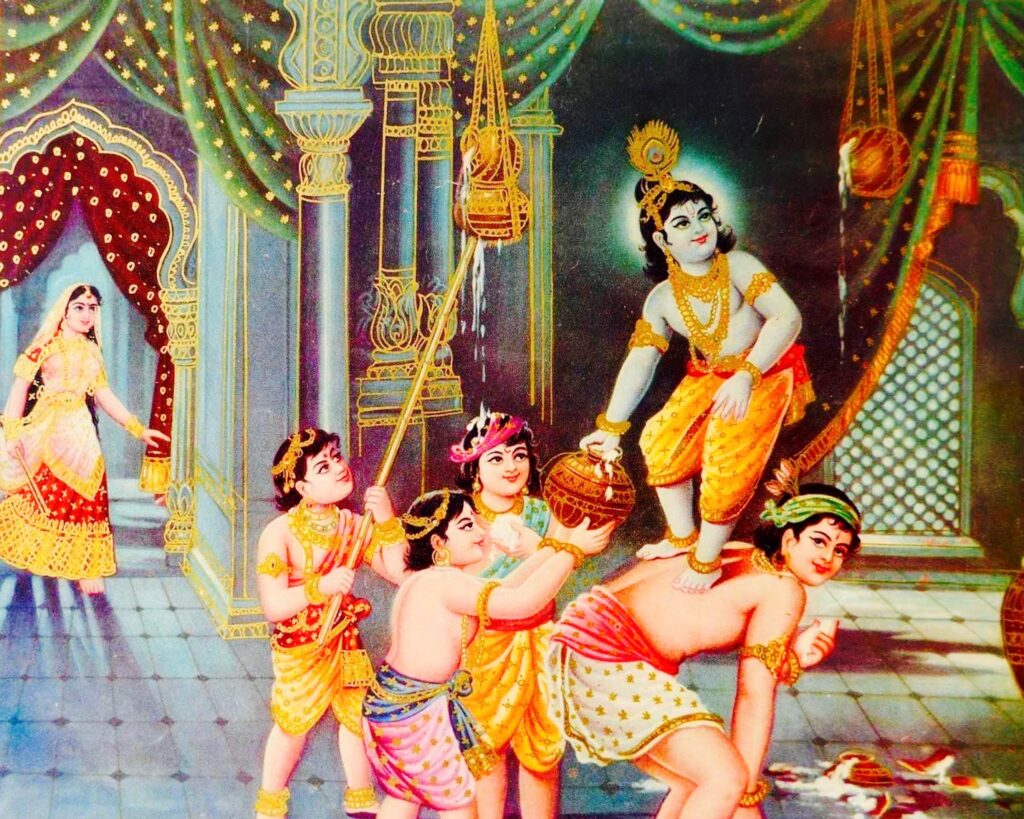
Krishna’s role in the Mahabharata is central to understanding Indian philosophy. This is one of the indian mythological stories that remains important because Krishna teaches Arjuna about duty, action without attachment and the nature of the self.
The Bhagavad Gita, a part of this story, continues to be studied worldwide for its wisdom. Krishna’s childhood stories from Vrindavan also shape festivals like Janmashtami and inspire numerous dance and music traditions.
3. The Mahabharata – The Epic of Human Complexities
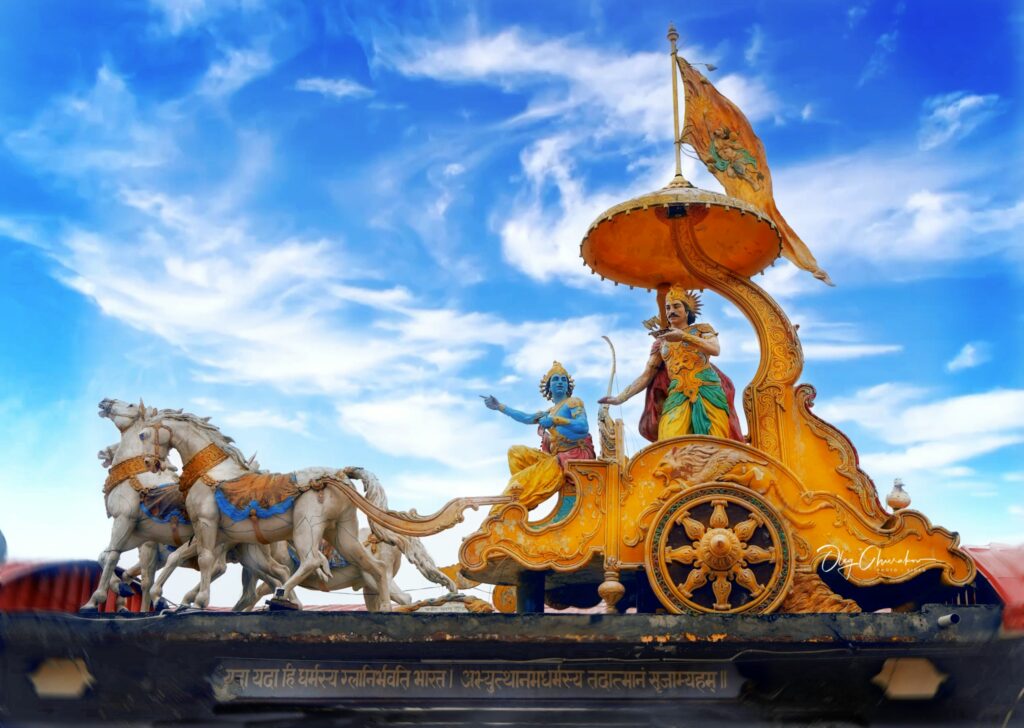
The Mahabharata is one of the longest indian mythological stories ever written. It does not portray characters as purely good or evil. Instead, it reflects human complexity, internal conflict and moral dilemmas.
The story highlights themes of justice, jealousy, loyalty and the consequences of choices. Characters like Bhishma, Karna, Draupadi and Yudhishthira each reflect different forms of strength and weakness that remain relevant today.
4. The Churning of the Ocean – A Story About Cooperation and Consequences
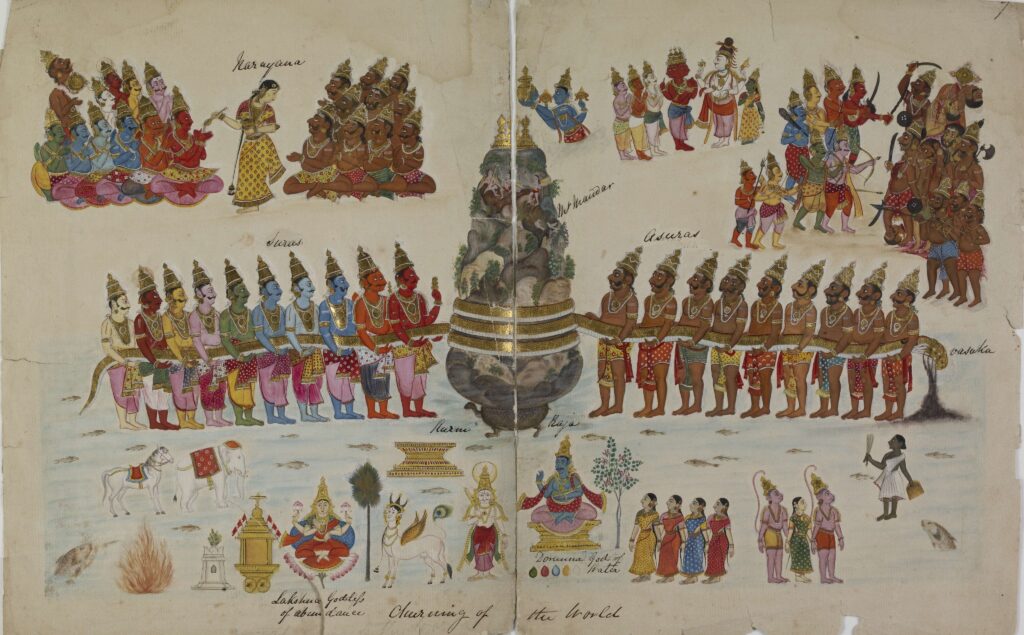
The Samudra Manthan is one of the most symbolic indian mythological stories. Gods and demons work together to churn the cosmic ocean in search of Amrit, the nectar of immortality.
The story teaches that cooperation, persistence and balance are necessary even when motivations differ. It also explains the emergence of important deities and objects, including the goddess Lakshmi.
5. Ganesha’s Wisdom and the Meaning of the Sacred Circle
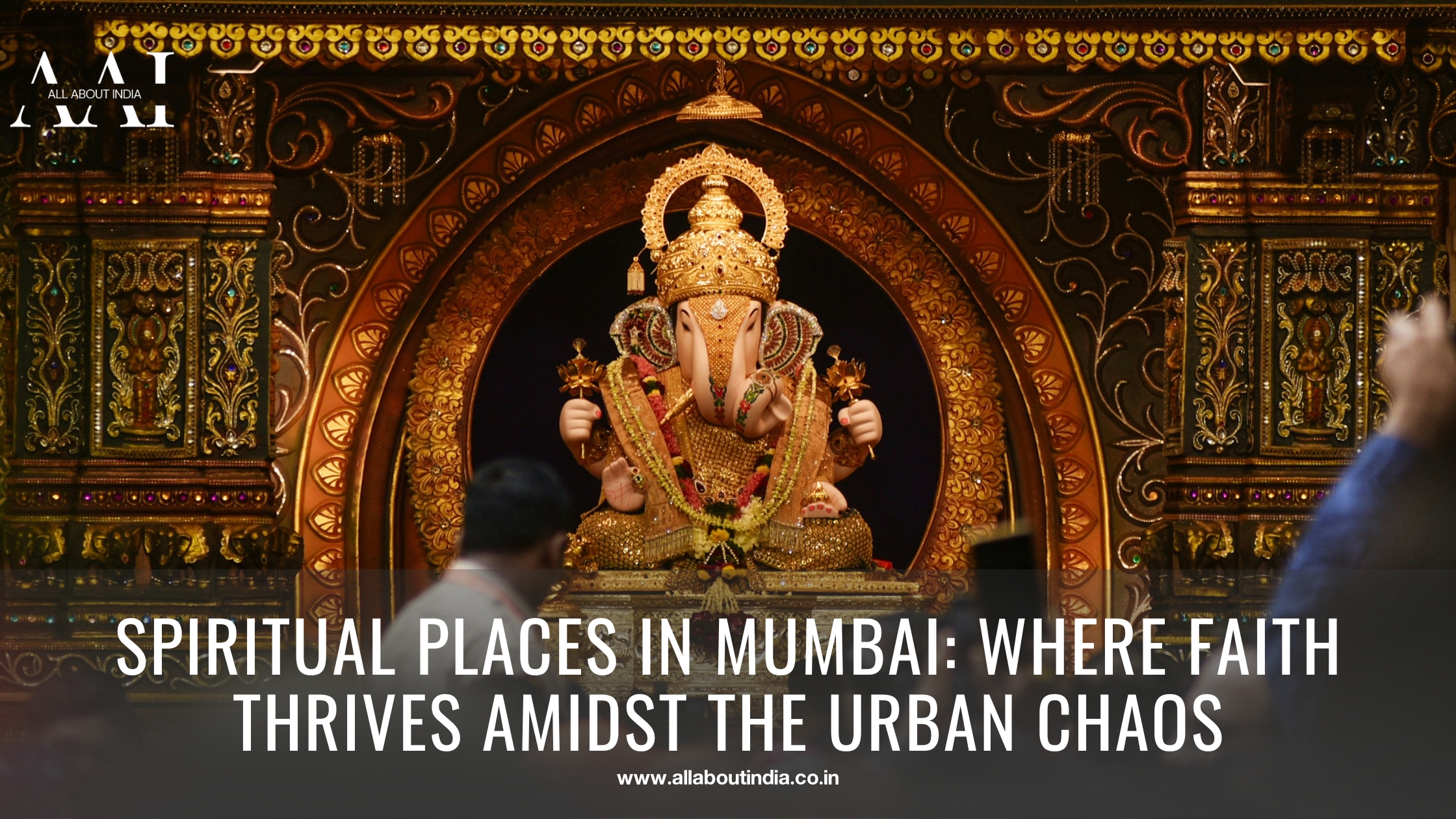
One of the most popular indian mythological stories is how Ganesha won a contest against Kartikeya by simply circling his parents. When asked why, he explained that his parents represented the universe.
The story teaches that wisdom often lies in perspective, not speed or competition. This story remains important in festivals, especially during Ganesh Chaturthi.
6. The Story of Goddess Durga – The Triumph of Good Over Evil
The fight between Goddess Durga and the demon Mahishasura is among the most celebrated indian mythological stories. It symbolizes courage, divine strength and protection against destructive forces.
Durga Puja and Navratri celebrations revolve around this story and reflect the victory of truth over injustice.
7. Nala and Damayanti – A Story of Love and Perseverance
This story from the Mahabharata describes the trials faced by Nala and Damayanti. Their devotion, separation and reunion form one of the most emotional indian mythological stories.
The narrative teaches resilience, trust and the power of remaining committed despite hardship.
8. Savitri and Satyavan – A Tale of Devotion and Determination
One of the indian mythological stories that emphasizes commitment is the tale of Savitri who follows Yama, the god of death, to win back the life of her husband Satyavan.
This story is remembered for its strong portrayal of loyalty, intelligence and steadfast love.
9. Prahlad and the Power of Unshaken Faith
Prahlad’s devotion to Vishnu despite his father Hiranyakashipu’s opposition is a major narrative in Indian lore.
It remains one of the indian mythological stories that symbolize devotion, courage and the triumph of faith over fear. Holi celebrations are connected to part of this story.
10. The Origin of the River Ganga – A Story of Purification
The descent of the river Ganga from the heavens to Earth is described in several indian mythological stories. King Bhagiratha’s penance leads to the river’s arrival and symbolizes purification, dedication and compassion.
This story explains why the Ganga remains a sacred river for millions.
Why These Stories Still Matter Today
These indian mythological stories remain relevant because they offer timeless lessons about duty, compassion, discipline, hope and resilience. Whether told through books, festivals, theater or temple rituals, the stories provide ethical guidance in a relatable format.
They also shape cultural behavior, family values and community traditions, making them an essential part of understanding India.
How Travelers Can Appreciate Mythological Traditions
Visit temples that are linked to major indian mythological stories. Observe rituals respectfully and ask knowledgeable guides for context. Explore museum collections, classical dance performances and local storytelling sessions to gain a deeper understanding.
Travelers can also read simplified versions of the Ramayana and Mahabharata before visiting places like Varanasi, Ayodhya, Haridwar or Ujjain, as this enhances interpretation of symbols and traditions.
Conclusion
Indian mythology continues to influence daily life, festivals, art and cultural practices. These indian mythological stories serve as a bridge between the past and present, teaching lessons that remain meaningful even in modern contexts. Understanding these stories helps travelers appreciate India’s heritage and the values that continue to shape its identity.






1 thought on “Indian Mythological Stories That Continue to Inspire Generations”