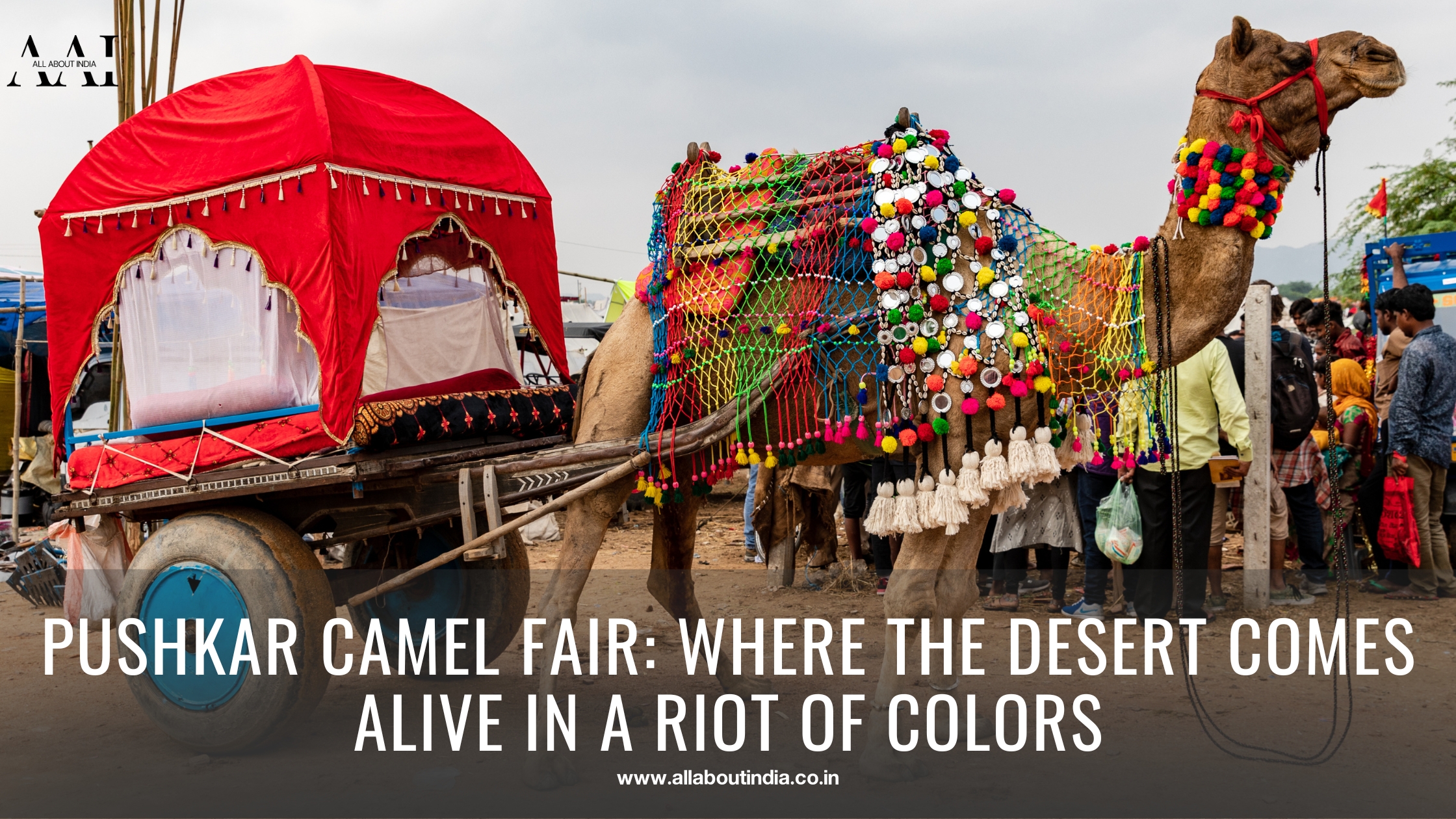
Imagine standing in the heart of the Thar Desert as dawn breaks over endless sand dunes. Thousands of camels adorned in vibrant fabrics, beads, and bells stretch as far as your eyes can see. The air fills with the rhythmic beats of Rajasthani folk music, the laughter of traders haggling over livestock, and the melodious chants of pilgrims bathing in sacred waters. This is not a dream—this is the magic of Pushkar Camel Fair, one of the world’s most spectacular cultural celebrations.
The Pushkar Camel Fair, also known as Pushkar Mela or Kartik Mela, transforms the tiny desert town of Pushkar in Rajasthan into a thriving carnival every November. What began centuries ago as a simple livestock trading gathering has evolved into a magnificent fusion of commerce, culture, spirituality, and celebration that attracts over 200,000 visitors from across the globe.
For seven extraordinary days, this ancient pilgrimage town becomes a vibrant tapestry of Rajasthani tradition—where camel traders from distant villages meet international travelers, where sacred Hindu rituals unfold alongside camel races and mustache competitions, where the mystical and the mundane dance together under the desert sky.
Whether you’re seeking spiritual awakening at the sacred Pushkar Lake, wanting to witness traditional Rajasthani culture in its most authentic form, hoping to capture stunning photographs of decorated camels and colorful crowds, or simply looking for an adventure that transcends ordinary tourism, the Pushkar Camel Fair promises an experience you’ll treasure forever.
The Legend and History: How Pushkar Camel Fair Began
Every great festival has an origin story, and the Pushkar Camel Fair is no exception. The fair’s roots are deeply intertwined with Hindu mythology and the sacred geography of Pushkar itself.
The Divine Creation of Pushkar
According to ancient Hindu legend, Lord Brahma—the creator deity—was engaged in a fierce battle with the demon Vajra Nabha who was terrorizing innocent people and killing children. During the combat, Brahma wielded a lotus flower as his divine weapon. As the battle reached its climax, three petals from the lotus fell from his hands to earth.
Where these petals touched the ground, water miraculously sprouted, creating three sacred lakes. The primary lake formed in what is now the town of Pushkar, deriving its name from “pushpa” (flower) and “kar” (hand)—literally meaning “the lotus from the hand.”
Recognizing the divinity of this location, Lord Brahma performed a grand yajna (ritual sacrifice) on the banks of this newly formed lake to consecrate it. This sacred ceremony transformed Pushkar into one of the holiest pilgrimage sites in Hinduism. To this day, Pushkar remains one of the very few places in the world with a temple dedicated to Lord Brahma, making it extraordinarily significant for Hindu devotees.
From Pilgrimage to Fair
The religious significance of Pushkar naturally drew thousands of pilgrims, especially during the auspicious month of Kartik in the Hindu lunar calendar. The full moon night of Kartik, known as Kartik Purnima, is considered especially holy. According to belief, all 33 crore (330 million) Hindu gods and goddesses descend to Pushkar Lake on this night, sanctifying its waters with divine presence.
Resourceful traders recognized an opportunity in this annual congregation of pilgrims. They began bringing their livestock—particularly camels, which were essential for desert transportation and agriculture—to sell to the visiting crowds. What started as informal trading gradually evolved into an organized livestock fair.
The Evolution into a Cultural Extravaganza
By the 19th century, the Pushkar Camel Fair had become well-established as a major livestock market, with nomadic communities like the Rabari and Raika traveling from across Rajasthan to trade their animals. These pastoral groups, who spent most of the year wandering the desert with their herds, used this annual gathering as both an economic opportunity and a social event.
Over the decades, the fair expanded beyond mere commerce. Cultural performances, competitions, and entertainment were added to attract more visitors and celebrate Rajasthani heritage. The government of Rajasthan recognized the fair’s tourism potential and began organizing official events, competitions, and cultural programs.
Today, the Pushkar Camel Fair has evolved into a UNESCO-recognized cultural phenomenon that perfectly balances its ancient spiritual roots with contemporary celebration, drawing visitors from every corner of the planet while maintaining its authentic Rajasthani character.
Pushkar Camel Fair: Dates and Festival Schedule
Planning your visit to the Pushkar Camel Fair requires understanding its timing and structure. The fair follows the Hindu lunar calendar, so dates vary each year.
Understanding the Fair’s Rhythm
The Pushkar Camel Fair essentially unfolds in two distinct phases:
Phase 1: The Trading Days (First 4-5 days) This period focuses on commerce and livestock. The fairgrounds fill with thousands of camels, horses, cattle, and sheep. Traders set up camp, showcase their animals, and engage in intense bargaining. If you want to witness the true camel trading spectacle, arrive during these early days.
The atmosphere is wonderfully chaotic—dust rising from thousands of hooves, the sounds of animals and negotiations, the sight of decorated camels being paraded for inspection, and the camps of nomadic communities stretching across the desert landscape.
Phase 2: The Spiritual Climax (Final 2-3 days) As Kartik Purnima approaches, the fair’s character shifts from commercial to spiritual. Most livestock has been sold and traders begin departing, but pilgrims arrive in massive numbers. The focus moves to religious ceremonies, the sacred bath in Pushkar Lake, and devotional activities.
The government-organized cultural programs, including folk performances, competitions, and entertainment events, typically run throughout the week but reach their peak during the middle days of the fair.
Day-by-Day Festival Schedule
While the specific schedule is officially released closer to the event, the Pushkar Camel Fair typically follows this pattern:
Day 1 : Opening ceremony, livestock begins arriving, camel decoration competitions commence, cultural performances begin, evening Deepdaan (lamp offering) ceremony
Day 2 : Camel races, horse dance performances, traditional sports like kabaddi, folk music concerts, bustling livestock trading
Day 3 : Spiritual walks around Pushkar Lake, singing competitions, classical and contemporary music performances, handicraft shopping at its busiest
Day 4 : Marathon events, cricket matches, famous mustache and turban tying competitions, bridal dress competitions, Sufi night performances
Day 5 : Matka race (pot race), women’s competitions, Indian bride and groom contests, live music performances, peak cultural activities
Day 6 : Best of Rajasthan cultural showcase, classical dance performances at historic temples, preparation for Kartik Purnima
Day 7 : Sacred bathing in Pushkar Lake at dawn, grand Maha Aarti ceremony in the evening, spiritual processions, closing ceremonies
Pro Tip: For the complete Pushkar Camel Fair experience, plan to stay for at least 3-4 days, to witness both the livestock trading and the cultural programs at their peak, before the final spiritual climax.
The Magnificent Camels: Stars of Pushkar Camel Fair
At the heart of the Pushkar Camel Fair stands the desert’s most majestic creature—the camel. These “ships of the desert” aren’t just livestock here; they’re celebrities, performers, and works of art.
Camels in Rajasthani Culture
Camels have been integral to Rajasthani desert life for millennia. In a land where water is scarce, temperatures extreme, and transportation challenging, these hardy animals provided solutions. They carried goods across trade routes, pulled water from deep wells, plowed fields, and transported families across vast desert distances.
The relationship between Rajasthani communities and their camels goes beyond utility—it’s almost spiritual. Nomadic groups like the Raika believe that camels were created by Lord Shiva himself for the amusement of Goddess Parvati, and that Shiva entrusted them with the sacred duty of caring for these animals.
The Art of Camel Decoration
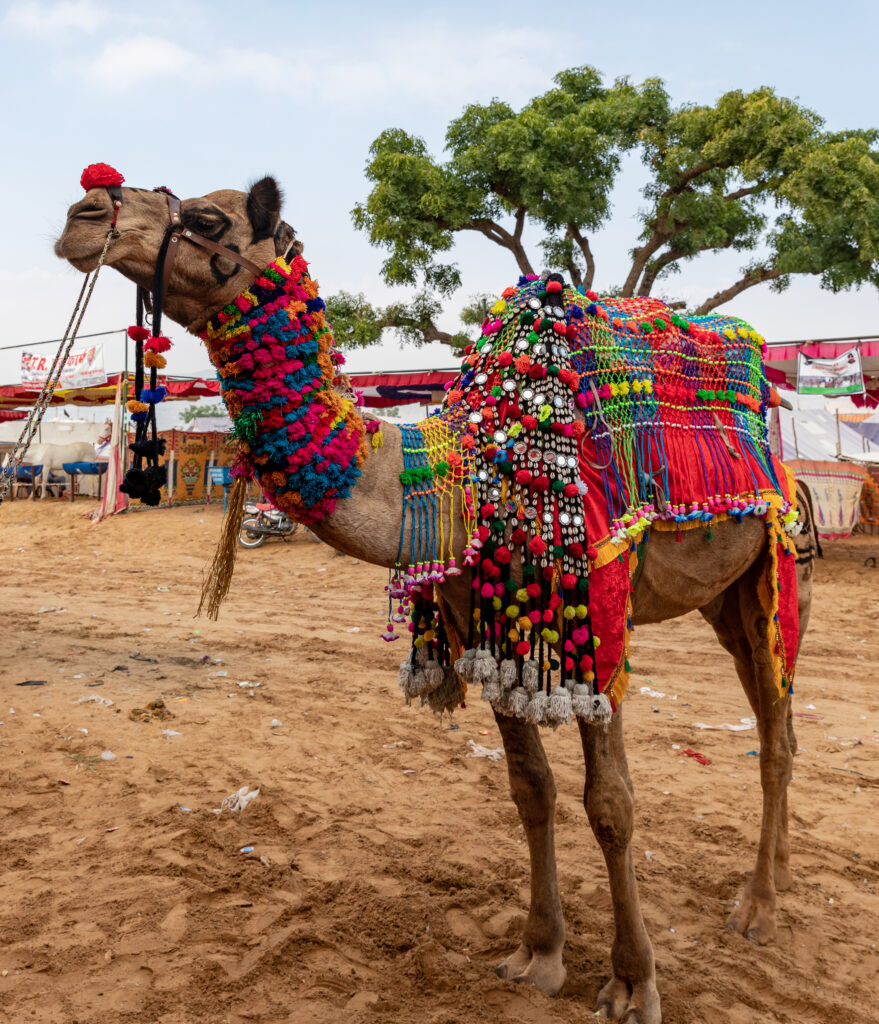
At the Pushkar Camel Fair, camels arrive dressed like royalty. Owners spend weeks preparing their animals for display, transforming them into walking works of art designed to attract buyers and win competitions.
Traditional Decorations Include:
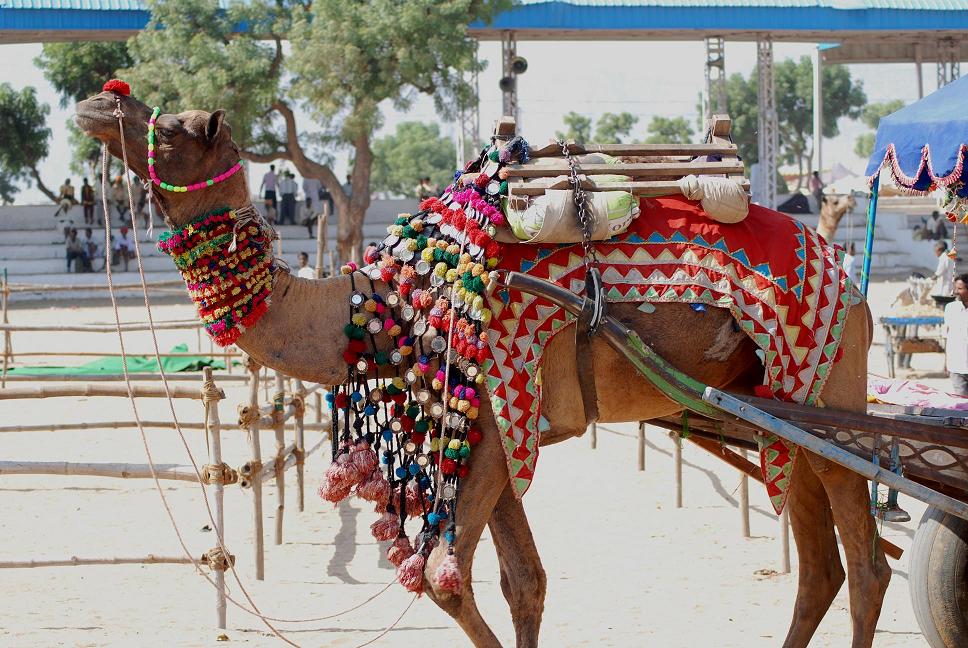
Colorful Fabrics: Bright embroidered cloths in red, orange, yellow, and purple drape the camels’ bodies. These fabrics often feature mirror work, beadwork, and traditional Rajasthani patterns.
Jewelry and Ornaments: Camel necks are adorned with bells that create melodious jingling sounds with every step. Beaded necklaces, decorative nose rings, and forehead ornaments add sparkle and elegance.
Body Paint: Some owners apply henna-like dyes or paints to create intricate patterns, geometric designs, or even humorous illustrations on the camels’ bodies.
Anklets and Leg Decorations: Colorful fabric strips or bead strings wrap around the camels’ legs, accentuating their movement during parades and races.
Saddles and Blankets: Elaborately decorated saddles with cushions and ornate blankets transform the camels into mobile thrones fit for maharajas.
Camel Competitions at Pushkar Camel Fair
The Pushkar Camel Fair features several competitions that showcase these magnificent animals:
Camel Beauty Pageant: Judges evaluate camels based on decoration, grooming, health, and overall aesthetic appeal. Winners receive prizes and significantly higher offers from buyers.
Camel Racing: One of the fair’s most thrilling events, camel races see these animals galloping across the desert at surprising speeds while riders cling to their backs. The atmosphere during races is electric, with crowds cheering enthusiastically.
Camel Dance: Trained camels perform synchronized movements to traditional Rajasthani music, lifting and swaying in rhythm. This unique performance demonstrates the deep bond between handlers and animals.
Best Decorated Camel: This competition purely judges decoration artistry, with owners creating increasingly creative and elaborate designs each year.
The Economics of Camel Trading
While cultural elements now dominate the Pushkar Camel Fair, livestock trading remains important for many attendees. Thousands of camels change hands during the fair’s early days.
Price Range: Camels at the fair typically sell for ₹5,000 to ₹50,000 (approximately $60-$600), depending on age, health, breed, and training. Racing camels or those with special abilities command premium prices.
The Declining Numbers: Interestingly, camel numbers at the fair have decreased in recent decades. In peak years, over 50,000 camels attended, but recent fairs see around 10,000-15,000. This decline reflects modernization—vehicles replacing camels for transportation, and younger generations of nomadic communities moving to urban jobs.
Despite decreasing commercial importance, camels remain the symbolic heart of the Pushkar Camel Fair, representing Rajasthan’s desert heritage and the enduring relationship between people and these remarkable animals.
Cultural Performances and Entertainment
The Pushkar Camel Fair is as much about cultural celebration as livestock trading. Rajasthan’s rich artistic traditions take center stage throughout the week.
Traditional Rajasthani Folk Performances
Ghoomar Dance: Rajasthan’s signature folk dance sees women in flowing, colorful ghagras (long skirts) twirling gracefully. The dance’s circular movements create mesmerizing visual effects, with skirts billowing like colorful blooms.
Kalbeliya Dance: Performed by the Kalbeliya community (traditionally snake charmers), this UNESCO-recognized dance features sensuous, serpentine movements. Dancers wear stunning black costumes with mirror work and silver jewelry, their movements mimicking cobras.
Chari Dance: Dancers balance brass pots on their heads—sometimes with lit lamps inside—while performing intricate footwork. The skill required to maintain balance while dancing is extraordinary.
Fire Dance: Performers dance while holding flaming torches or even dancing through rings of fire, showcasing courage and skill in equal measure.
Live Music Filling the Desert Air
Music is the soul of the Pushkar Camel Fair. Throughout the fairgrounds and in evening programs, various musical performances enchant audiences:
Folk Musicians: Local artists play traditional instruments including the morchang (Jew’s harp), khartal (wooden clappers), dholak (drum), algoza (double flute), and ravanhatha (ancient string instrument).
Devotional Singing: Bhajans (devotional songs) and spiritual music create an atmosphere of devotion, especially near Pushkar Lake and temples.
Contemporary Performances: The fair also features performances by popular Bollywood singers and contemporary artists, blending tradition with modern appeal.
Sufi Nights: Special evening programs sometimes include Sufi music performances, with qawwali singing that transcends religious boundaries and touches the soul.
Unique Competitions and Quirky Contests
The Pushkar Camel Fair is famous for its unusual and entertaining competitions:
Longest Mustache Competition: Rajasthani men take immense pride in their mustaches, viewing them as symbols of honor and masculinity. This competition features participants with truly spectacular facial hair—some mustaches extend several feet and are styled in creative ways. Winners are celebrated as cultural heroes.
Turban Tying Competition: Speed and skill determine winners in this contest where participants race to tie traditional Rajasthani turbans (pagris) perfectly. The turbans are long—sometimes 30-40 feet of fabric—requiring technique and practice.
Matka Phod (Pot Breaking): This competition involves hanging clay pots filled with buttermilk at a height. Participants form human pyramids to reach and break the pots, with teams competing for prizes.
Bridal Competition: Women dress in traditional Rajasthani bridal attire—elaborate ghagras, heavy jewelry, intricate henna designs—competing for the title of best-dressed bride. This showcases Rajasthan’s stunning bridal traditions.
Tug of War: Both men’s and women’s teams compete in traditional tug of war contests, with intense rivalries between villages and communities.
Kabaddi Matches: This traditional Indian contact sport sees local teams competing against each other, with matches drawing enthusiastic crowds.
Puppet Shows and Street Performers
Kathputli (puppet shows) represent an ancient Rajasthani art form. Skilled puppeteers manipulate wooden puppets to tell folk tales, historical stories, and mythological legends. These performances, accompanied by narration and music, offer enchanting glimpses into Rajasthan’s storytelling traditions.
Snake charmers, magicians, acrobats, and street performers add to the carnival atmosphere, creating entertainment at every turn throughout the fairgrounds.
The Spiritual Heart: Kartik Purnima and Sacred Rituals
While camels and culture draw tourists, the Pushkar Camel Fair remains fundamentally a sacred pilgrimage for millions of Hindu devotees.
The Significance of Kartik Purnima
Kartik Purnima, the full moon day ending the Hindu month of Kartik, is considered one of the holiest days in the Hindu calendar. Multiple auspicious events are believed to have occurred on this day:
- Lord Vishnu’s Matsya Avatar (fish incarnation) appeared
- Lord Shiva defeated the demon Tripurasura
- Lord Brahma completed his creation of the universe
- The 330 million gods and goddesses descend to bathe in sacred waters
For devotees, bathing in Pushkar Lake on Kartik Purnima is believed to cleanse all sins accumulated across lifetimes and grant spiritual merit equivalent to performing numerous yajnas (sacred rituals).
The Sacred Pushkar Lake and Its 52 Ghats
Pushkar Lake sits at the town’s heart, surrounded by 52 ghats (stepped embankments leading to the water). Each ghat has its own significance, often associated with different royal families, saints, or Hindu deities.
During the Pushkar Camel Fair, and especially on Kartik Purnima, these ghats overflow with pilgrims. Devotees believe that the lake’s waters possess extraordinary purifying powers—capable of healing physical ailments, absolving sins, and granting spiritual liberation.
The Ritual Bath Process:
- Pilgrims descend the ghat steps at dawn
- They immerse themselves completely in the sacred waters
- Prayers and mantras are chanted
- Offerings of flowers, coconuts, and incense are made to the water
- Some pilgrims circle the entire lake, visiting all 52 ghats
The Evening Maha Aarti Ceremony
Each evening during the fair, and spectacularly on Kartik Purnima, the Maha Aarti (grand prayer ceremony) unfolds at the ghats. Thousands of devotees gather as priests perform elaborate rituals:
- Massive brass lamps with multiple wicks are lit
- Priests chant Vedic mantras in unison
- Bells, drums, and conch shells create a symphony of sound
- Devotees offer their own small lamps, flowers, and prayers
- Hundreds of floating diyas (oil lamps) are released onto the lake, creating a magical spectacle as they drift across the water like fallen stars
The atmosphere during these ceremonies is profoundly moving—the combination of chanting, music, flickering lamps, and collective devotion creates an experience that transcends religious boundaries.
The Only Brahma Temple in the World
One of Pushkar’s most significant features is the Brahma Temple, believed to be the only major temple in the world dedicated to Lord Brahma, the creator deity.
Why Only One Brahma Temple? According to legend, Brahma’s first wife Saraswati placed a curse on him that he would be worshiped in only one place on Earth. This curse resulted from Brahma performing a yajna with another goddess (Gayatri) when Saraswati was delayed, causing her anger.
The temple, dating to the 14th century, features distinctive architecture with a red spire and the image of a four-headed Brahma. During the Pushkar Camel Fair, especially on Kartik Purnima, the temple sees massive crowds of devotees seeking blessings.
Sadhus and Spiritual Seekers
The fair attracts numerous sadhus (Hindu ascetics)—holy men who have renounced worldly life in pursuit of spiritual enlightenment. These orange-robed figures, many with long matted hair and ash-smeared bodies, meditate along the ghats, perform austerities, and offer blessings to pilgrims.
For spiritual seekers from around the world, the Pushkar Camel Fair offers opportunities to witness authentic Hindu devotion, participate in ancient rituals, and experience India’s living spiritual traditions.
Adventure Activities and Desert Experiences
Beyond culture and spirituality, the Pushkar Camel Fair offers thrilling adventure opportunities set in Rajasthan’s stunning desert landscape.
Hot Air Balloon Rides
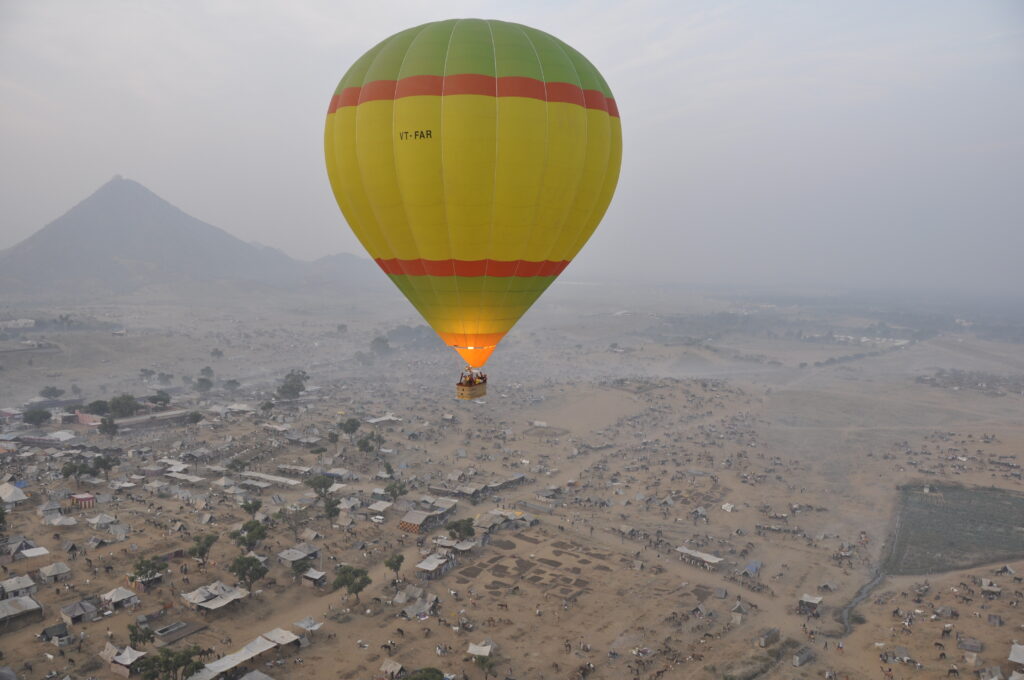
One of the most magical ways to experience the Pushkar Camel Fair is from the sky. Hot air balloon rides operate during the fair, offering breathtaking aerial views of:
- The massive fairgrounds with thousands of camels, tents, and people
- The sacred Pushkar Lake surrounded by white temples
- The golden sand dunes of the Thar Desert stretching to the horizon
- The Aravalli Hills framing the landscape
- Sunrise or sunset painting the desert in spectacular colors
Details: Flights typically last 60-90 minutes, ascending to 12,000-14,000 feet. The experience costs approximately ₹8,000-12,000 per person (price may vary). Book in advance as slots fill quickly.
Camel Safaris
Experiencing the desert from camelback offers an authentic taste of traditional Rajasthani travel. Various camel safari options are available:
Short Sunset/Sunrise Safaris: 2-3 hour rides through the desert, timed to witness either sunset or sunrise. These family-friendly options provide camel riding experience without being too strenuous.
Full-Day Safaris: Extended rides visiting remote villages, exploring deeper into the desert, with lunch at a village home or desert picnic.
Overnight Safaris: Multi-day expeditions camping under the stars, cooking over campfires, and truly experiencing nomadic desert life.
What to Expect: Camel riding requires some adjustment—the swaying motion takes getting used to! Riders sit on padded saddles, with handlers guiding the camels. The pace is gentle, allowing you to absorb the peaceful desert atmosphere.
Jeep and ATV Desert Adventures
For those wanting speedier desert exploration, jeep safaris and ATV (all-terrain vehicle) rides provide thrilling alternatives:
Jeep Safaris: Navigate sand dunes, visit remote temples and villages, and cover more ground than possible on camel or foot.
ATV Rides: Quad biking across sand dunes offers adrenaline-pumping excitement. No experience necessary—instructors provide training before rides.
Traditional Rural Sports and Games
The Pushkar Camel Fair revives traditional Indian village games that have been played for centuries:
Gilli Danda: An ancient game similar to cricket, using wooden sticks. Visitors can join locals in matches.
Tug of War: Teams compete in this universal test of strength and coordination.
Kabaddi: This contact sport, now internationally recognized, originated in Indian villages. Watching or participating in matches at the fair provides authentic cultural immersion.
The Vibrant Marketplace: Shopping at Pushkar Camel Fair
The Pushkar Camel Fair transforms into one of India’s most colorful and diverse marketplaces, offering treasures that reflect Rajasthan’s rich artisan traditions.
What to Buy at Pushkar Camel Fair
Textiles and Clothing:
- Bandhani (Tie-Dye) Fabrics: Traditional Rajasthani textiles with tiny tie-dye dots creating intricate patterns
- Block-Printed Textiles: Hand-stamped fabrics using carved wooden blocks and natural dyes
- Embroidered Garments: Mirrorwork blouses, embroidered skirts, and traditional Rajasthani costumes
- Colorful Turbans: Long fabric pieces in vibrant colors that can be styled into traditional pagris
- Bedspreads and Home Textiles: Beautiful decorative pieces featuring Rajasthani designs
Jewelry:
- Silver Jewelry: Rajasthani tribal jewelry, including heavy necklaces, earrings, and anklets
- Costume Jewelry: Colorful, affordable pieces perfect as gifts or souvenirs
- Camel Bone Jewelry: Unique pieces crafted from camel bone, an eco-friendly material
Handicrafts:
- Leather Goods: Sandals (traditional juttis), bags, and belts from Rajasthan’s famous leather craftsmen
- Brassware: Decorative brass items including lamps, bells, and figurines
- Wooden Handicrafts: Carved boxes, toys, and decorative items
- Puppets: Traditional Rajasthani kathputli puppets in colorful costumes
- Camel-themed Souvenirs: Everything from camel keychains to decorative camel figurines
Rajasthani Artwork:
- Miniature Paintings: Traditional art depicting mythological scenes, royal courts, or desert life
- Blue Pottery: Distinctive Jaipur-style ceramics with blue and white glazes
Bargaining Tips for the Fair
Prices at the Pushkar Camel Fair are rarely fixed. Bargaining is expected and part of the experience:
- Start at 40-50% of the asking price and negotiate upward
- Compare prices at multiple stalls before buying
- Buy in bulk for better discounts on similar items
- Be prepared to walk away if the price doesn’t suit—often vendors will call you back with better offers
- Keep negotiations friendly and respectful; it’s a cultural exchange, not a battle
Fair Price Estimates:
- Traditional textiles: ₹200-2,000 depending on size and work
- Silver jewelry: ₹500-5,000 based on weight and craftsmanship
- Leather juttis: ₹300-800 per pair
- Small souvenirs: ₹50-500
- Artwork: ₹500-10,000 based on size and detail
The Food Experience
Pushkar is a strictly vegetarian town where meat, eggs, and alcohol are prohibited within its limits. This restriction stems from its sacred status as a Brahma pilgrimage site. However, don’t let this concern you—Rajasthani vegetarian cuisine is spectacularly flavorful!
Must-Try Foods at Pushkar Camel Fair:
Dal Baati Churma: Rajasthan’s signature dish featuring hard wheat rolls (baati) served with lentil curry (dal) and sweet crushed wheat (churma). The baatis are traditionally baked in desert sand and ghee, creating a crispy exterior and soft interior.
Malpua: Sweet, syrupy pancakes that are perfect festival treats—crispy on the outside, soft inside, and absolutely indulgent.
Kachori: Deep-fried bread stuffed with spiced lentils or peas, served with tangy chutneys.
Rabri: Thick, sweet condensed milk dessert topped with nuts—a Rajasthani specialty.
Lassi: Creamy yogurt drinks, both sweet and salted versions, perfect for desert heat.
Mirchi Bada: Spicy chili peppers stuffed with potato mixture, coated in chickpea batter and deep-fried.
Street Snacks: Samosas, pakoras, aloo tikki, pani puri—all the Indian street food favorites are available from countless vendors.
Important Note: Pushkar’s water quality can be challenging for unaccustomed stomachs. Stick to bottled water and freshly cooked hot food to avoid digestive issues.
Planning Your Visit to Pushkar Camel Fair
How to Reach Pushkar
By Air: The nearest airport is Kishangarh Airport in Ajmer, approximately 40 kilometers from Pushkar. However, this small airport has limited connectivity.
Jaipur International Airport, about 150 kilometers away, offers much better connectivity with flights from Delhi, Mumbai, Bangalore, Kolkata, and other major cities. From Jaipur, you can hire taxis or take buses to Pushkar (3-4 hour journey).
By Train: Ajmer Junction, just 15 kilometers from Pushkar, is the nearest major railway station with excellent connectivity to Delhi, Mumbai, Jaipur, Ahmedabad, and other cities. From Ajmer, frequent buses and taxis cover the short distance to Pushkar in 30 minutes.
By Road: Pushkar is well-connected by road. State-run and private buses operate from Jaipur (145 km, 3 hours), Jodhpur (200 km, 4-5 hours), Udaipur (280 km, 6 hours), and Delhi (400 km, 7-8 hours). Private taxis and car rentals offer more comfortable alternatives.
Where to Stay During Pushkar Camel Fair
Accommodation during the Pushkar Camel Fair requires advance booking—sometimes months ahead—as the town’s limited options fill quickly.
Luxury Desert Camps: Several operators set up elaborate tented accommodations specifically for the fair. These luxury camps offer:
- Swiss-style tents with attached bathrooms
- Running hot water and electricity
- Buffet meals (vegetarian Rajasthani cuisine)
- Cultural performances (bonfire with folk dances)
- Proximity to fairgrounds
Price Range: ₹4,000-10,000 per night per tent (price may vary)
Heritage Hotels and Resorts: Pushkar has several heritage properties converted into hotels:
- Pushkar Palace (lake-facing rooms, royal ambiance)
- Gulaab Niwaas Palace (sky pool, traditional architecture)
- The Pushkar Bagh (boutique resort with modern amenities)
Price Range: ₹3,000-8,000 per night (price may vary)
Mid-Range Hotels: Numerous comfortable hotels in and around Pushkar offer good amenities at reasonable prices:
- Inn Seventh Heaven
- Pushkar Resorts
- Hotel Third Eye
- Green Park Resort
Price Range: ₹1,500-3,500 per night (price may vary)
Budget Guesthouses and Hostels: Budget travelers can find simple guesthouses and hostels near Pushkar Lake:
- Hostelavie Pushkar
- 12 Monks Hostel
- Various family-run guesthouses
Price Range: ₹400-1,200 per night (price may vary)
Accommodation Tips:
- Book 3-6 months in advance for the fair period
- Expect price increases during the fair—hotels charge 2-3 times regular rates
- Choose location carefully—staying at fairgrounds means dust and noise but immersive experience; staying in town means comfort but daily travel to fairgrounds
- Read recent reviews—temporary fair camps vary significantly in quality
- Confirm all amenities—some camps advertise facilities they don’t actually provide
What to Pack for Pushkar Camel Fair
Clothing:
- Light, breathable cotton clothes for daytime (temperatures can reach 25-30°C)
- Warm layers for early mornings and evenings (temperatures drop to 10-15°C)
- Modest clothing respecting the sacred town’s religious nature (cover shoulders and knees)
- Comfortable walking shoes as you’ll walk extensively on sand and uneven ground
- Sun hat and sunglasses for protection from intense desert sun
- Scarf or shawl for temple visits and dust protection
Essential Items:
- Sunscreen (high SPF) and lip balm
- Reusable water bottle to stay hydrated
- Hand sanitizer and wet wipes for hygiene
- Basic medications (stomach medicines, pain relievers, bandages)
- Flashlight or headlamp as fairgrounds can be dark at night
- Cash in small denominations as ATMs may run out and card payments are rare
- Camera with extra batteries and memory cards
Optional but Useful:
- Dust mask for sensitive respiratory systems
- Small backpack for daily essentials
- Portable phone charger
- Earplugs if staying near fairgrounds
Best Time to Visit During the Fair Week
While the fair runs for seven days, different periods offer distinct experiences:
Best for Livestock Trading: early days Best for Cultural Programs: middle days Best for Spiritual Experience: Kartik Purnima days Best for Photography: when everything is at its peak
Photography Tips for Pushkar Camel Fair
The Pushkar Camel Fair offers spectacular photography opportunities—a riot of colors, fascinating subjects, and dramatic desert light.
Camera Equipment Recommendations
Essential:
- Camera with manual controls (DSLR, mirrorless, or advanced compact)
- Wide-angle lens (16-35mm) for landscape and crowd shots
- Mid-range zoom (24-105mm or 24-70mm) for versatility
- Fast lens (f/2.8 or wider) for low-light evening shots
Optional but Valuable:
- Telephoto lens (70-200mm) for candid portraits and detail shots
- Tripod for long exposures and night photography
- Spare batteries and multiple memory cards
- Lens cleaning kit (dust is inevitable!)
When to Shoot
Golden Hours: Sunrise (6:00-8:00 AM) and sunset (5:00-6:30 PM) provide the most beautiful light—warm, golden tones that make everything glow.
Blue Hour: Just after sunset, the deep blue sky contrasts beautifully with artificial lights and bonfires.
Harsh Midday: While generally avoided by photographers, the strong overhead sun at the Pushkar Camel Fair can create dramatic shadows and high-contrast images.
Subject Ideas
Camel Portraits: Capture decorated camels in detail—their ornaments, painted bodies, expressive faces.
Cultural Performances: Dancers mid-twirl, musicians lost in their art, acrobats in action.
People and Portraits: Colorfully dressed locals, weathered faces of traders, joyful children, sadhus in meditation. Always ask permission before photographing people.
Candid Moments: Traders negotiating, families cooking at campsites, pilgrims in prayer, craftsmen at work.
Aerial Perspectives: If taking a hot air balloon ride, capture the bird’s-eye view of the sprawling fairgrounds.
Night Scenes: Bonfires, illuminated tents, the evening Aarti with floating lamps.
Technical Tips
Exposure: The bright desert environment can fool your camera’s meter. Use exposure compensation (+0.5 to +1 stop) to avoid underexposed images.
Focus: In crowded, chaotic environments, use continuous autofocus and back-button focus techniques for better accuracy.
Dust Protection: Desert dust is your camera’s enemy. Change lenses minimally, use lens hoods, and keep gear in sealed bags when not shooting.
Backup Your Files: Download and backup images daily—memory cards can fail, and losing these once-in-a-lifetime shots would be heartbreaking.
Ethical Photography
Respect Privacy: Not everyone wants their photo taken. Always ask permission, especially for close-up portraits. A smile and gesture toward your camera usually communicates your intention.
No Photos During Prayer: Avoid photographing people during their intimate spiritual moments at temples or during bathing rituals unless they’ve clearly consented.
Offer to Share: If someone agrees to be photographed, offer to email them the image. Carry business cards with your email for this purpose.
Avoid Exploitation: Don’t photograph people in ways that could be seen as mocking, condescending, or exploitative.
Cultural Sensitivity and Responsible Tourism
The Pushkar Camel Fair is first and foremost a local event with deep cultural and religious significance. As visitors, practicing respectful tourism enhances both your experience and the fair’s sustainability.
Respecting Religious Sites
Temple Etiquette:
- Remove footwear before entering any temple
- Don’t enter inner sanctums unless explicitly permitted
- Avoid loud conversations or disruptive behavior
- Don’t touch religious idols or offerings without permission
- Photography may be restricted—always ask
Pushkar Lake:
- This is a sacred water body. Avoid any behavior that could be seen as disrespectful
- Don’t throw garbage or non-biodegradable items in the water
- If participating in rituals, do so with genuine respect or simply observe
- Dress modestly when near the lake and ghats
Interaction with Locals
Do:
- Greet people with “Namaste” (hands together, slight bow)
- Learn a few Hindi phrases—locals appreciate the effort
- Bargain respectfully at markets
- Ask permission before photographing people
- Respect personal space, especially with women
Don’t:
- Touch people’s heads (considered sacred)
- Point feet at people or deities (considered disrespectful)
- Display public affection (frowned upon in traditional areas)
- Criticize or mock local customs and beliefs
- Give money to begging children (it encourages the practice)
Animal Welfare Considerations
The treatment of animals at the Pushkar Camel Fair can be a concern for some visitors:
Reality Check: Working animals in rural India face different welfare standards than in Western countries. While most camel owners have deep bonds with their animals and depend on their health, some practices may seem harsh to outsiders.
What You Can Do:
- Support camel owners who demonstrate good animal care
- If taking camel rides, choose operators who treat animals well
- Don’t support activities that seem cruel or exploitative
- Report clear cases of abuse to fair authorities
Balanced Perspective: The Pushkar Camel Fair has brought increased attention to animal welfare, and conditions have improved over decades. Most camels are well-cared-for assets whose health directly impacts their owners’ livelihoods.
Environmental Responsibility
Minimize Plastic: Carry reusable water bottles and shopping bags. Refuse single-use plastics when possible.
Proper Waste Disposal: Use designated trash bins. If none are available, carry your waste until you find proper disposal.
Support Local Artisans: Buying directly from craftspeople supports traditional arts and provides fair compensation.
Choose Eco-Friendly Accommodation: Some camps and hotels prioritize sustainability—support these businesses.
Nearby Attractions: Extending Your Rajasthan Journey
While the Pushkar Camel Fair itself warrants several days, the surrounding region offers additional attractions.
Ajmer (15 km from Pushkar)
Ajmer Sharif Dargah: One of India’s most important Sufi shrines, the tomb of Sufi saint Moinuddin Chishti attracts pilgrims of all faiths. The spiritual atmosphere and devotional qawwali music create a profound experience.
Ana Sagar Lake: A scenic artificial lake perfect for peaceful evening walks.
Adhai Din Ka Jhonpra: Ancient mosque with stunning Indo-Islamic architecture, built in just two-and-a-half days according to legend.
Jaipur (145 km from Pushkar)
Rajasthan’s capital city, known as the Pink City, offers magnificent forts, palaces, and markets:
- Amber Fort
- City Palace
- Hawa Mahal (Palace of Winds)
- Jantar Mantar (astronomical observatory)
- Vibrant bazaars
Jodhpur (200 km from Pushkar)
The Blue City features the impressive Mehrangarh Fort, Umaid Bhawan Palace, and atmospheric old city lanes filled with indigo-painted houses.
Udaipur (280 km from Pushkar)
Often called the City of Lakes, Udaipur enchants with its romantic palaces, serene lakes, and stunning sunsets.
Trip Planning Tip: Many travelers combine the Pushkar Camel Fair with a broader Rajasthan circuit, creating comprehensive cultural journeys through India’s most colorful state.
Safety Tips and Practical Advice
Health and Safety
Water and Food Safety:
- Drink only bottled water
- Eat freshly cooked hot food
- Avoid raw salads and unpeeled fruits
- Carry oral rehydration salts for potential stomach issues
Sun Protection:
- Desert sun is intense—use high SPF sunscreen
- Stay hydrated—drink water constantly
- Wear hats and sunglasses
- Take breaks in shade during peak afternoon hours
Crowd Management:
- Keep valuables secure in inner pockets or money belts
- Beware of pickpockets in crowded areas
- Stay aware of your surroundings
- Travel in groups when possible, especially at night
Money and Connectivity
Cash: ATMs in Pushkar often run out of money during the fair. Withdraw sufficient cash before arriving or in Ajmer.
Connectivity: Mobile network coverage can be spotty. Download offline maps and important information before arriving.
Emergency Contacts:
- Local police: 100
- Tourist police: Available at fairgrounds
- Medical emergencies: 108
- Fire: 101
Scams to Avoid
Flower/Puja Scams: People may offer you flowers or perform unexpected pujas, then demand exorbitant payments. Politely refuse unless you’ve agreed on a price beforehand.
Fake Guides: Unauthorized guides may approach you offering services. Use official guides or those recommended by your hotel.
Overpriced Transport: Auto-rickshaw and taxi drivers may quote inflated prices during the fair. Agree on fares before starting journeys or use metered services.
The Future of Pushkar Camel Fair
The Pushkar Camel Fair faces both opportunities and challenges as it evolves in the 21st century.
Modernization vs. Tradition
As India modernizes, the fair must balance preserving authentic traditions with meeting contemporary expectations. The number of camels has declined as vehicles replace them for transportation. Younger generations of nomadic communities increasingly move to urban jobs rather than continuing pastoral lifestyles.
Yet the fair has successfully adapted, expanding cultural and tourism elements while maintaining its spiritual core. Government support, improved infrastructure, and international recognition have helped sustain this centuries-old tradition.
Sustainable Tourism
With over 200,000 visitors annually, managing the Pushkar Camel Fair’s environmental impact becomes crucial. Initiatives focusing on waste management, water conservation, and eco-friendly practices are gradually being implemented.
Responsible tourism—where visitors respect local culture, support local economy, and minimize environmental impact—will determine whether the fair can thrive for future generations.
Cultural Preservation
The fair serves an important role in preserving Rajasthani folk arts, traditional music, crafts, and customs that might otherwise fade. By providing platforms for artists and artisans, creating economic incentives for traditional skills, and documenting disappearing practices, the Pushkar Camel Fair functions as a living museum of Rajasthani culture.
Conclusion: Why Pushkar Camel Fair Should Be on Your Bucket List
In a world where authentic cultural experiences become increasingly rare, the Pushkar Camel Fair stands as a testament to tradition’s enduring power. This is not a manufactured tourist attraction or a sanitized cultural display—it’s a real, living event where commerce, devotion, celebration, and community converge in their raw, unfiltered forms.
Where else can you witness thousands of magnificently decorated camels parading across desert sands, watch devotees bathing in sacred waters as they’ve done for centuries, dance to folk music under star-filled skies, haggle in bustling markets for traditional handicrafts, and witness spiritual ceremonies that connect modern participants to ancient traditions?
The Pushkar Camel Fair offers something increasingly precious in our homogenized world—genuine cultural immersion. It challenges you, sometimes overwhelms you, occasionally confuses you, but ultimately transforms you. You leave with not just photographs and souvenirs, but with expanded perspectives on faith, community, tradition, and what constitutes meaningful celebration.
Whether you’re drawn by the spectacle of camels, the allure of Rajasthani culture, the call of spiritual exploration, the thrill of desert adventures, or simply the desire to experience something utterly unique, the Pushkar Camel Fair delivers beyond expectations.
Pack your bags, bring your curiosity and respect, and prepare for a journey into the heart of Rajasthan’s soul. The desert awaits, the camels are being decorated, the musicians are tuning their instruments, and millions of pilgrims are planning their sacred journey.
Will you join them in experiencing the magic of the Pushkar Camel Fair?